


In meteorology, there’s an atmospheric effect called a “temperature inversion.” It’s when a layer of cold air gets stuck below a blanket of warmer air aloft.
Generally, the results aren’t healthy. Air pollution can be trapped in the cold air, leading to hazardous air quality. Or whole areas can get bogged down in foggy, cold weather. (This happened where I live last week, and trust me, it was gross.)
A similar phenomenon is happening in Washington, D.C. — but not with weather. With law enforcement.
In an ideal world, justice should follow a natural gradient of accountability. More severe crimes at the top should face harsher punishments, with less severe sanctions for more minor crimes at the bottom. Kingpins are supposed to face steeper consequences than their underlings. Most importantly, everyday people who haven’t done anything wrong are supposed to be protected above all.
Obviously, we do not live in an ideal world. Smaller-scale accountability inversions (think Marc Rich) dot our history. And we’ve never truly succeeded in delivering accountability for some of the most consequential wrongdoings (think Vietnam, Iraq, or the 2008 financial crisis).
Still, the Trump administration has flipped this gradient of justice to an unprecedented degree. We have open impunity for the powerful, regardless of their crimes; harsh punishment for the disfavored and unconnected; and, for some, brutality without any due process.
This inversion is happening through many different vectors, like pardon abuses, politicization of the DOJ and the military, and unconstitutional actions by federal agents.
Like trapped air pollution, this accountability inversion is poisoning our democracy.
The story of Juan Orlando Hernández and Alejandro Carranza
Consider the fate of two Latin American men at the hands of the Trump administration.
Juan Orlando Hernández is a powerful man. He was president of his country, Honduras, for eight years. He once accepted a $1 million bribe from El Chapo. According to the DOJ, he sought to “stuff the drugs right up the noses of the gringos.”
Hernández was arrested in 2022. Over the course of a three-week trial in New York City, extensive evidence proved that Hernández played a key leadership role in a conspiracy that successfully transported more than half a million kilograms of cocaine through Honduras to the United States.
That’s not all. Per the Department of Justice:
As a congressman, then President of the Honduran National Congress, and finally the two-term President of Honduras, Hernández was allegedly paid millions of dollars in cocaine proceeds which he used to enrich himself, finance his political campaigns, and commit voter fraud while the people of Honduras endured conditions of poverty and rampant violence.
For context, 500,000 kilograms is approximately the cargo capacity of seven Air Force C-17 Globemaster planes.

At the conclusion of the trial, a jury found Hernández guilty. A judge sentenced him to 45 years in prison. Throughout the process, he had extensive legal representation. He had every opportunity to present evidence and witnesses to the jury. Even after conviction, Hernández retained a number of powerful friends — including Donald Trump’s longtime associate, Roger Stone, who continued to advocate on Hernández’s behalf.
That advocacy worked. On Tuesday, Donald Trump issued “a Full and Complete Pardon,” releasing Hernández from prison four decades early.
Alejandro Carranza, in contrast, was not a powerful man. Public reporting indicates he was simply a fisherman in the Colombian seaside city of Santa Marta. He was married and had four children.
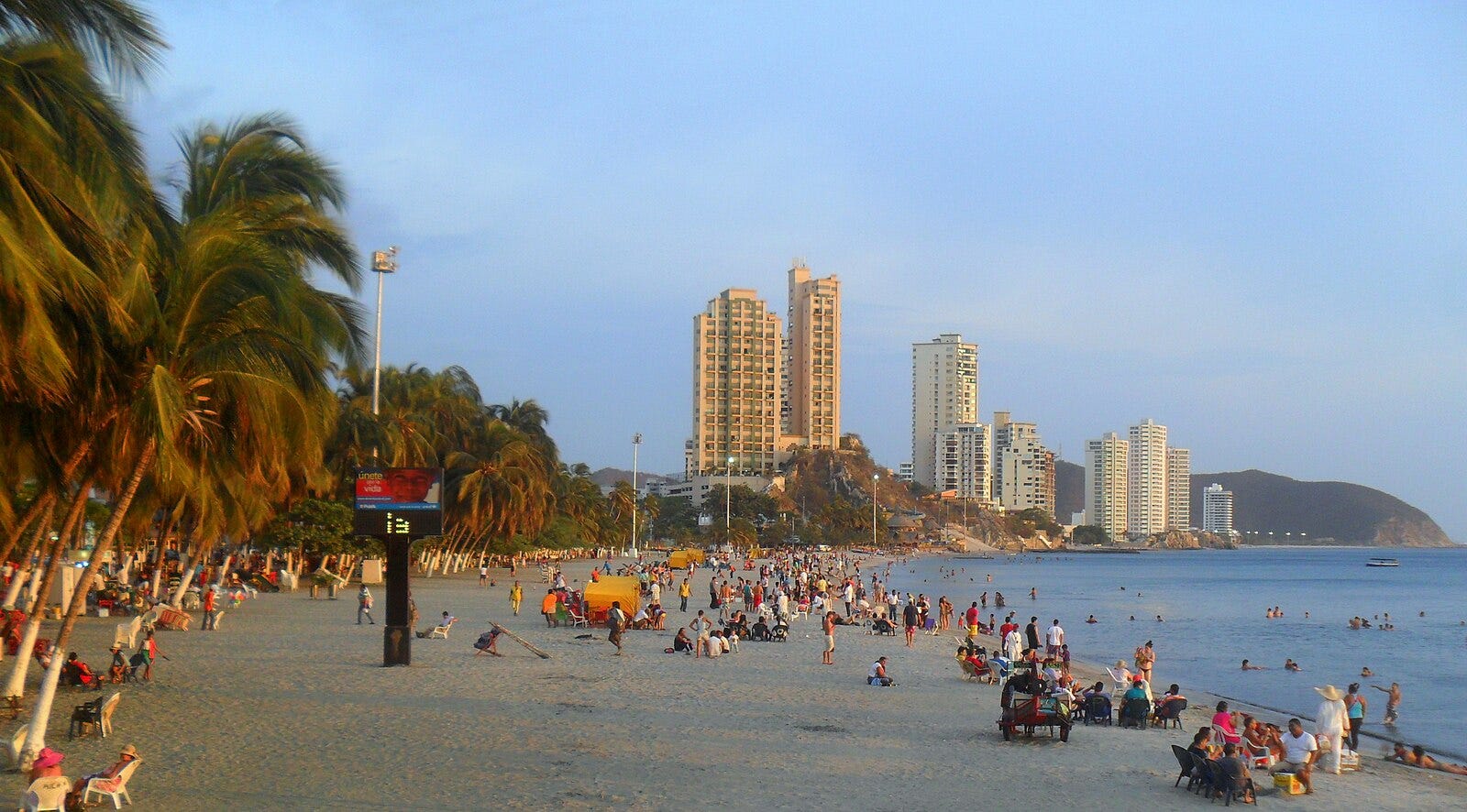

We have no idea whether or not Carranza was secretly a drug trafficker (or even connected to illegal activity), but his wife insists “he had no ties to drug trafficking, and his daily activity was fishing.”
On Sept. 15, Carranza told his father he was heading to a spot “with good fish.” A friend said, “He went offshore to catch sierra, tuna, and snapper, which are found far out at this time of year.”
He was nowhere near U.S. territorial waters, but the Trump administration claims it suspected Carranza’s fishing boat was carrying drugs eventually bound here. Unlike Hernández, though, Carranza did not see a trial. Or even arrest. He had no opportunity to try to dispute the allegation.
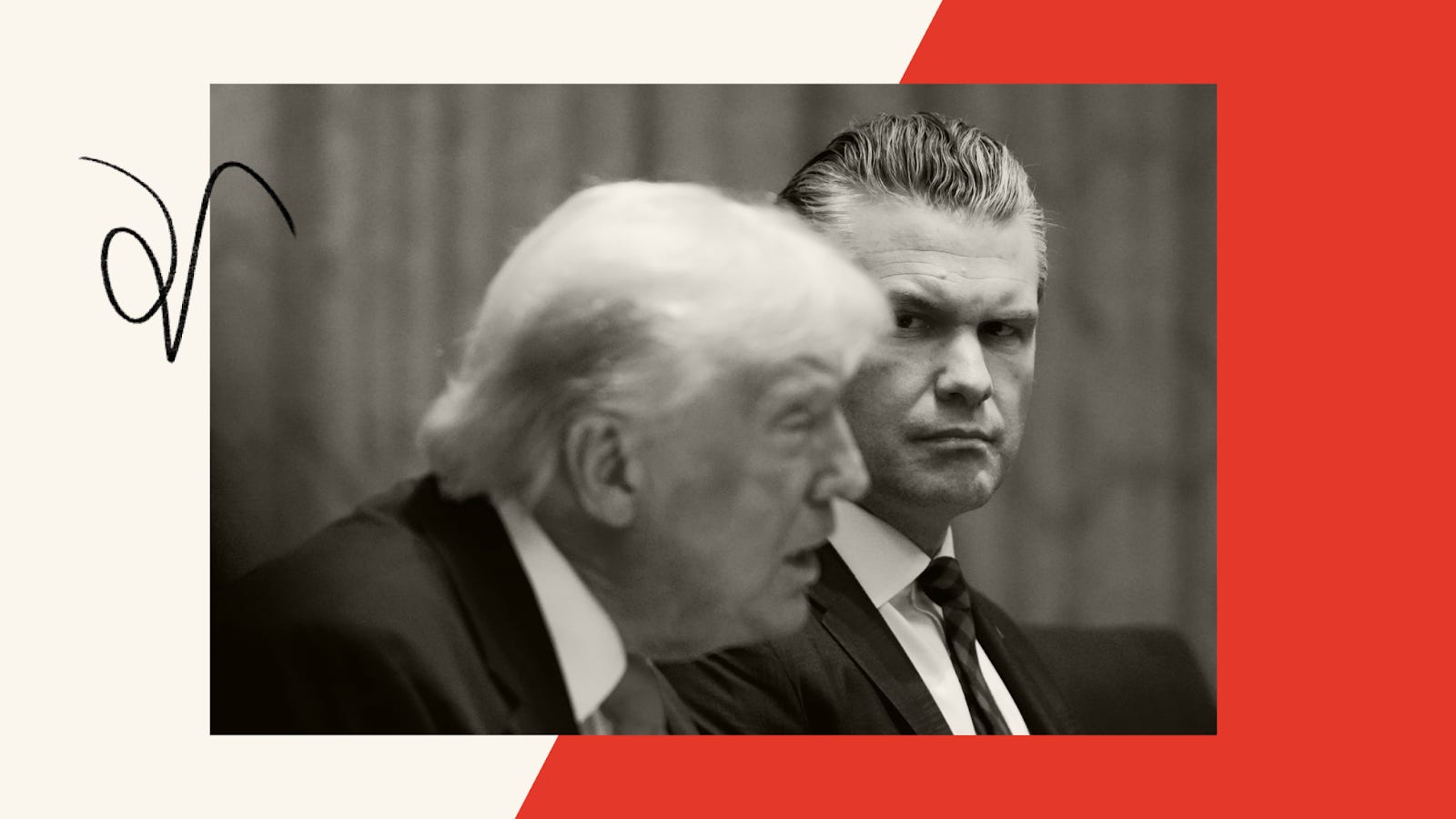
He was executed by an airstrike as part of a campaign ordered by Defense Secretary Pete Hegseth.
Fouling the principles of justice from top to bottom
This pattern of inversion — where low-level suspects face cruel and unusual treatment while powerful criminals get practically pampered — is happening up and down the federal government.
This week, in addition to Hernández, Trump also pardoned former Democratic congressman Henry Cuellar, who took over half a million dollars in bribes from Azerbaijan. He also commuted the sentence of David Gentile, a private equity executive convicted of a $1.7 billion “Ponzi-like” scheme.
So far in his second term, Trump has pardoned over 1,600 people, including former congressman and fraudster George Santos; crypto executive Changpeng Zhao; Silk Road founder Ross Ulbricht; tax cheat nursing home executive Paul Walczak; and a long list of other investors, supporters, and business associates. (And, of course, Ghislaine Maxwell was transferred to a minimum-security prison.)
Why is Trump inverting justice?
Mostly, it seems to be corruption, politics, and personal gain. Giving powerful people special treatment is a core entrenchment strategy of all competitive authoritarians.1 Plus, Trump also clearly maintains a deep sense of resentment over efforts to hold him accountable for potential wrongdoing in the past. As he said this week:
Well, [Hernández] was the president, and they had some drugs being sold in their country, and because he was the president, they went after him — that was a Biden horrible witch hunt.
Meanwhile, the White House has directed much of the federal government to take a draconian approach towards many everyday people suspected of crimes, even beyond the summary executions for suspected drug trafficking.
Reporting yesterday from The New York Times found the government’s own data shows most immigrants arrested in city crackdowns have no criminal record.
As Ansley Skipper wrote last month, federal law enforcement is even targeting people who are specifically following the rules — attending immigration check-ins, applying for asylum, and so on.
Just to illustrate what this all looks like in practice, watch this video of a woman detained in the Florida Keys this week under suspicion of being an undocumented immigrant (she was later released).
The point is not whether any specific person was or was not guilty of whatever crime the administration suspects them of.
Again, we don’t know for sure whether Alejandro Carranza was involved in the drug trade in any capacity. Same for the at least 86 others who have been killed in extrajudicial strikes ordered by Defense Secretary Hegseth.2
The point is precisely that we didn’t know. Yet every day, people of various nationalities who have not been convicted of any wrongdoing are being treated by the U.S. government with unconscionable brutality. At the same time, powerful people who have been proven to have committed crimes — like Juan Orlando Hernández, Henry Cuellar, George Santos, and Changpeng Zhao — are getting remarkably special treatment.
It’s all inverted. Everything’s upside down… for now.
How an inversion collapses
I cannot tell you exactly how this all ends, but here is a hypothesis.
A temperature inversion ends when sunlight heats the ground below, eventually warming enough air that it pierces the lid of cold air. Suddenly, the whole unstable equilibrium collapses and everything mixes back together until a normal gradient is restored.
I suspect the key to overcoming the accountability inversion is similar. Enough metaphorical sunlight — enough transparency, accountability, public pressure — and suddenly the weight of the injustice will collapse in on itself.
Don’t look now, but this may already be starting to happen (at least with the boat strikes, the rest of the inversion may admittedly take longer).
Republican lawmakers sound ever more angry at Defense Secretary Hegseth. Here’s GOP Rep. Mike Turner:
This activity that’s happening in the Caribbean where they are hitting these boats -- these individuals if they were captured and tried and convicted, they would be guilty, if they were found guilty, of criminal activity for which they’re not subject to capital punishment. They would be put in jail… These people are being killed.
Sen. Rand Paul said of Hegseth: “Either he was lying to us on Sunday, or he’s incompetent and didn’t know it had happened.” The Wall Street Journal editorial board is calling for Congressional oversight. Even Newsmax’s legal analyst, Andrew Napolitano, said Hegseth “should be prosecuted for a war crime.”
The outrage is building. Keep letting the sunlight in. Sooner or later, accountability and justice will prevail.
Independent agencies go before SCOTUS Monday
On Monday, the Supreme Court will hear oral arguments in the case of Slaughter v. Trump. Protect Democracy’s Amit Agarwal — the former solicitor general of Florida and one-time clerk to now-Justices Kavanaugh and Alito — will argue on behalf of former FTC Commissioner Rebecca Kelly Slaughter. You should be able to listen to oral arguments here.
This case has three main potential upshots:
The further expansion and consolidation of executive power at a time of already rampant executive abuses.
Whether billionaires and political cronies will control and corrupt federal agencies.
The integrity of federal agencies that serve vital roles in American society, including regulating the economy, protecting Americans from corporate exploitation, and making sure consumer products are safe to use.
If SCOTUS rules in Trump’s favor, it would grant the president unbridled power to fire independent economic regulators without cause, threatening the American economy and enabling political corruption.
What else we’re tracking:
My Protect Democracy colleagues who work on defending civic space have a new piece for Nonprofit Quarterly: This giving season, nonprofits should address the chill in the air. (Keep an eye out for their forthcoming regular column in the magazine, which will launch in January.)
And, speaking of resources for civil society organizations, we also have a new primer in the Nonprofit Toolkit series: What if … your organization is concerned about asset freezes and forfeiture?
Last week, Protect Democracy (represented by American Oversight) sued for records on reported Trump administration efforts to investigate and target nonprofits. Said JoAnna Suriani: “Americans deserve to know whether the government is using its vast law enforcement and financial surveillance powers to investigate nonprofits simply because the president disagrees with their views.”
Federal forces moved on to their latest target city: New Orleans. Read my colleagues’ advice from Chicago’s success in pushing back: A playbook for the federal immigration surge in New Orleans.
34 retired admirals, generals, and service secretaries are warning about the dangers of politicized domestic deployments, as the Trump admin appeals a judge’s ruling that the National Guard deployment to DC is illegal. Read their brief to the D.C. Circuit Court of Appeals here.
For example, the Hernández pardon may have been timed to influence a Honduran election that the White House sought to meddle in this week. There’s also an extremely bizarre crypto connection involving a for-profit city off the Honduran coast — Paul Krugman writes about it here.
We don’t know in part because they are dead and their boats are mostly at the bottom of the Caribbean Sea and Pacific Ocean.
Hernández received a pardon because he agreed to cooperate and provide intelligence on the cartels.
"impunity for the powerful...harsh punishment for the disfavored ...brutality without any due process." - were all in full swing under the puppet-Biden administration. The Trump admin is your so-called warm air pushing out the solution. You are a buffoon.
Unsubscribed