


When federal immigration agents deployed to Chicago this year, terrorizing families, detaining American citizens, and even literally rappelling from Black Hawk helicopters into apartment buildings, Chicagoans pushed back. And it worked.
The Trump administration has said it wants to use American cities as training grounds for the military. Federal forces are being deployed not to address emergencies, but to create images of chaos, suppress dissent, and condition Americans to get comfortable with masked men with guns marching through their own city’s streets.
As New Orleanians and lawyers who have litigated to protect protesters, clergy, and the press from unconstitutional federal force in Illinois, we’ve seen up close what an effective response looks like. Chicagoans showed us that communities don’t have to accept this fate.
Here are three lessons that Chicago can teach New Orleans about how to effectively resist the incoming federal deployment.
Unity under a ‘big tent’
Chicago’s response was effective because ordinary people refused to be divided. While Governor JB Pritzker and Mayor Brandon Johnson — far from political allies previously — were unified from the start, community resistance didn’t wait for permission from City Hall.
Faith leaders across the theological spectrum issued joint letters. Members of the clergy, including one of our clients, the Rev. David Black, literally put their bodies on the line in peaceful protest at the Broadview ICE facility and throughout Chicago. In September, federal agents shot Black seven times with chemical projectiles as he prayed. Business leaders also made the case that federal deployments harm workers and the local economy.
Coordination requires collaboration. Civic organizations created trusted channels for residents to communicate and document evidence of illegal actions, ensuring that when bad actors engaged with hostility towards the public, the community was watching.
This whole-of-society approach means that when federal forces arrive, they face not just rhetorical opposition but an organized infrastructure of accountability.
Show that the deployment is everyone’s problem
The most effective protests have been sustained, daily, and have drawn from a diverse cross-section of society. They include everyday people, elderly residents, and faith leaders. When one of our plaintiffs in Chicago, William Paulson, a white 67-year-old retired union painter, ended up on his hands and knees vomiting from tear gas exposure, it became impossible for the government to frame their violent actions as targeting only “antifa,” “outside agitators,” or some other bogeymen.
Chicago succeeded in part because a diverse set of residents experienced firsthand that militarized law enforcement threatens everyone. Federal agents don’t just disrupt the lives of undocumented immigrants; they terrorize neighborhoods daily, shut down streets where citizens move freely, and fill the air with chemical weapons near schools and homes. When journalists covering the story were hit with rubber bullets, when American citizens had their front doors blown up, the targets of these actions just didn’t fit the administration’s narrative of only going after the worst of the worst.
Quick legal action focused on accountability
Cases in California, Oregon, and Illinois demonstrated that rapid litigation creates accountability and constrains unconstitutional federal tactics.
In Illinois, we, along with our co-counsel, represented media organizations, clergy, and private citizens whose First Amendment rights to protest, pray, and observe were brutally violated by federal agents. But lawyers cannot litigate without evidence, and that evidence came directly from the community.
The legal victories had an impact. After a federal district court in Chicago issued a preliminary injunction prohibiting unwarranted uses of excessive force, indiscriminate use of chemical weapons, and retaliation against the press and protestors, Border Patrol’s agent in charge, Gregory Bovino, announced he was leaving the city. It was the footage captured by neighbors, the testimony of pastors, and the documentation by local journalists that allowed us to bring the government into court.
And while that order has been stayed pending appeal, the litigation has laid bare the brutality and extent of federal use of force, stripping the administration of its ability to deny what was happening on American streets and calling the government into court to answer for its actions.
Get ready, New Orleans
The Department of Homeland Security has announced that New Orleans is next and that agents may be operating in the Greater New Orleans area and across South Louisiana for months. Here are some lessons from other cities that New Orleans can use to protect its residents:
Before deployment happens, pre-bunk bogus federal justifications. The administration claims that its enforcement operation will target only those immigrants convicted of crimes. That is false. Every resident can do the work of truth-telling: Speak to your neighbors, your city council members, and your social circles to debunk that lie loudly and repeatedly.
Document federal abuses. The most damning evidence in Chicago’s litigation came from residents filming federal violence on their phones and sharing far and wide on platforms like TikTok, Reddit, X, and others. Treat this not just as social media content but as a shared civic duty.
Force the issue. When neighborhoods stand united to say, “We don’t need federal help,” it makes it impossible for the administration to claim they are here to “save” the city.
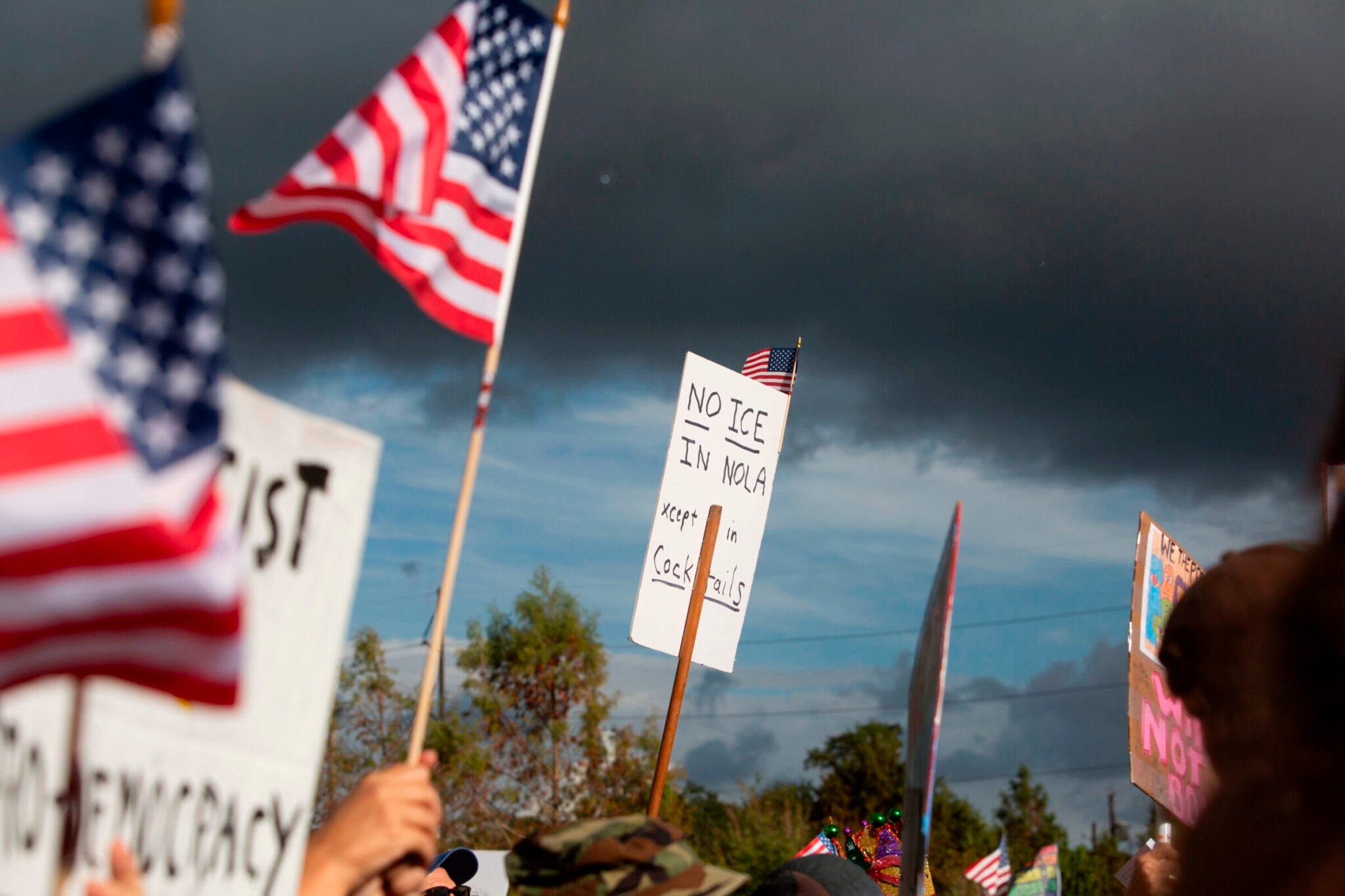
Keep it peaceful. Portland protesters used humor, showing up in costumes that successfully deflated federal attempts to portray them as threats. Nonviolent resistance from a broad cross-section of the community demonstrates that opposition comes from ordinary Americans defending their city, not from fringe agitators.
The path forward
What Chicago proved is that whole-of-society opposition works. When elected officials, police chiefs, faith leaders, business owners, and ordinary residents stand together to say “not in our city,” they model the kind of broad-based community-driven resistance that authoritarian movements cannot easily dismiss or overcome.
Americans have always known that the true guardians of our constitutional system aren’t found only in government. We’re being reminded that they’re in churches and newsrooms, on jury benches and city streets; anywhere people refuse to accept that militarized force is an appropriate response to the routine work of governing, working, and simply living in American cities.
Chicagoans showed us that refusal — sustained, strategic, and united — can turn these deployments from demonstrations of federal power into demonstrations of constitutional courage. New Orleanians can, too.
This piece was originally published in Verite News, a New Orleans-based nonprofit newsroom.


This is great. Thank you for the work you do!
Thank you for highlighting the work of people in Chicago and DF’s support. It’s important to note that there are best practices when it comes to recording and dealing with ice encounters. Particularly, sharing identifying videos on social media without the victim’s consent.