


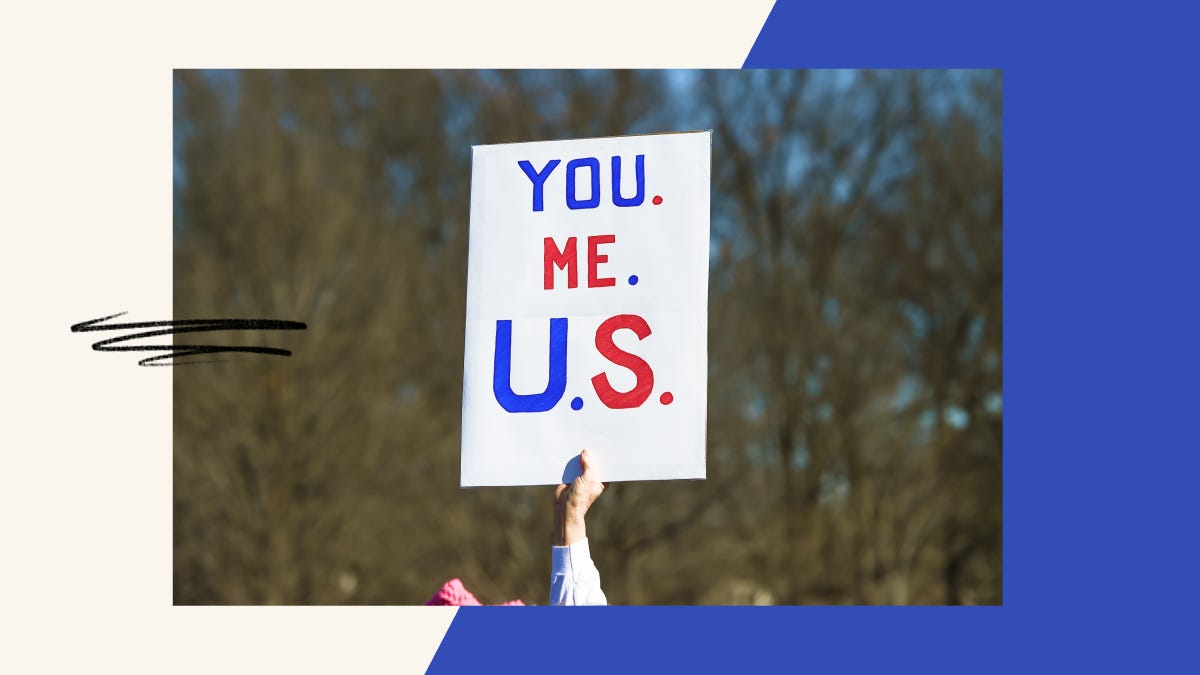
On Saturday, the United States turns 250.
In 1787, as the story goes, a woman stopped Benjamin Franklin outside the Constitutional Convention and asked what kind of government the delegates had made. “A republic,” he answered, “if you can keep it.” This newsletter took its name from that answer. But Franklin left one thing unsaid: kept by whom?
The presumption, now more than ever, is that the keeping and the tending of America belong to someone else; to institutions, elected officials, and public figures. That presumption is wrong. A democracy cannot be sustained by any one person or group. Ours has lasted this long because everyday Americans chose, in words popularized by Theodore Roosevelt, to “do what you can, with what you have, where you are.”
To be sure, it’s a mindset that runs against many of the forces shaping American life today: institutional and interpersonal distrust, the loneliness epidemic, and a sense that the challenges facing our communities are simply too large for any one person to influence. Everyone’s feeling the weight.
Read more — How you can protect democracy
It’s natural, then, that we would scroll and search for the fix for our lives and for the candidates who swear they’ll solve it all.
The actual necessary work can seem frustrating, even pointless, in contrast, when so many already feel like we have so little else to give. But this work isn’t asking for more; it’s asking for something different — a democratized heroism where we acknowledge our responsibility to shepherd in a brighter future and appreciate the power found in a commitment to principle, participation, and connection rooted where we are. These principles have guided our democracy at its best over the past 250 years.
Lessons from abroad and our own history
This spring, Hungarian voters ended Viktor Orbán’s 16-year authoritarian grip. Much was deservedly written about the savvy political leadership of Péter Magyar and his Tisza Party, but the breakthrough was equally built by ordinary Hungarians who refused to bow to cynicism and organized localized community groups known as “islands” — small groups of neighbors who met, talked, and built the civic muscle necessary to bring their democracy back from the brink. Their names won’t appear in a history book, but the result of their resilience and commitment will.
Read more — Is Budapest the bellwether?
Our own history tells the same story of everyday courage. The Revolutionary War, the Civil War, the Civil Rights Movement — we remember the generals and the speeches, but the foundation was laid by people whose names are lost: the free Black communities just across the Ohio River who supported the Underground Railroad despite the risks and the Southern families cooking meals for the Freedom Summer activists.
What we look back on as sparks that led to sudden movements are really the natural sprouting of seeds, sown by hundreds of thousands of Americans, most of them unknown, for a harvest they knew they might not see.
Civic life is more than one moment
Movements, in other words, are made of steady personal habits that strengthen over time. For a democracy “by and for the people” to sustain, we the people must integrate democratic principles into who we are. And just like going to the gym or starting a new hobby — intentional, consistent effort is the key.
That sort of engaged life is a meaningful life, and that commitment to the places and people around us shapes how we show up, who we stay connected to, and ultimately what our democracy becomes.
The pattern usually starts in small, day-to-day ways. Someone might start by staying informed about what’s happening locally — checking community updates or attending a local meeting. Over time, those small steps can lead to conversations with neighbors or community groups and a clearer sense of where they can make a difference. Staying informed can also open up new opportunities to get more involved, like becoming a poll worker or helping organize a local voter registration drive after learning that many young people in the community are not registered to vote.
Over time, these efforts form a powerful pattern. They become a way of living that keeps us connected to the communities we’re part of and ripples out.
None of these steps is heroic on its own. But added together, they are the answer to how a democracy keeps itself.
If you’re looking for a place to begin, our How You Can Protect Democracy webpage gathers dozens of ways to start — in your community, with your local institutions, at whatever scale your life allows.
Here are a few entry points:
Consistency matters more than intensity. Do what you can, when you can, and stay engaged where you are. Don’t assume someone else will take responsibility for what you care about, and don’t wait for the “perfect” moment to get involved.
America is waiting for us
Each of us might be tempted to wait for a big moment of change or a heroic fix — a savior, the “perfect” candidate, or a transformational political realignment. But the truth is harder and calls us all to account. What strengthens democracy is a people committed to shared, steady work scaling over time.
So, this weekend, do one small thing. Join a table at America’s Potluck. Look up when your town council meets next and put it on the calendar. Head over to a neighbor’s porch and ask them how they’re doing.
America is waiting for us to realize that democracy’s story is the collection of our own. Its promise is dependent on the commitments we each make to live out democracy in our share of the pages.
The president now has more control over federal agencies
The overruling of Humphrey's Executor v. United States gives the president much more direct control over the operations of federal agencies. Earlier this week, we hosted a conversation with Sen. Cory Booker, former Federal Trade Commissioner Rebecca Slaughter, and Protect Democracy Special Counsel Amit Agarwal, where they discussed the ruling, which dramatically expands presidential power and weakens Congress’s longstanding ability to ensure that independent agencies can make decisions free from political pressure. You can watch highlights from the conversation below:
Community resilience in the 2026 elections
Election interference has, in recent history, been mostly associated with foreign actors. There were concerns about the role Russia played in the 2016 election, and much of America’s election infrastructure is built to ward off threats from foreign adversaries that might undermine this crucial lever of American democracy.
As we’ve covered extensively, this cycle is different. During the 2026 midterms, election interference from the United States government could be an even greater threat than that posed by any foreign power.
That’s why Over Zero and Protect Democracy created a guide to support communities around the country who are taking action to ensure that all eligible voters can cast their ballots in free, fair, and safe elections — even in the face of threatened interference and voter intimidation.


Great article this morning full of useful information.
From Canada's Joni...
"You don't know what you've got til it's gone..."
Joni Michell, Big Yellow Taxi, Reprise, 1970