


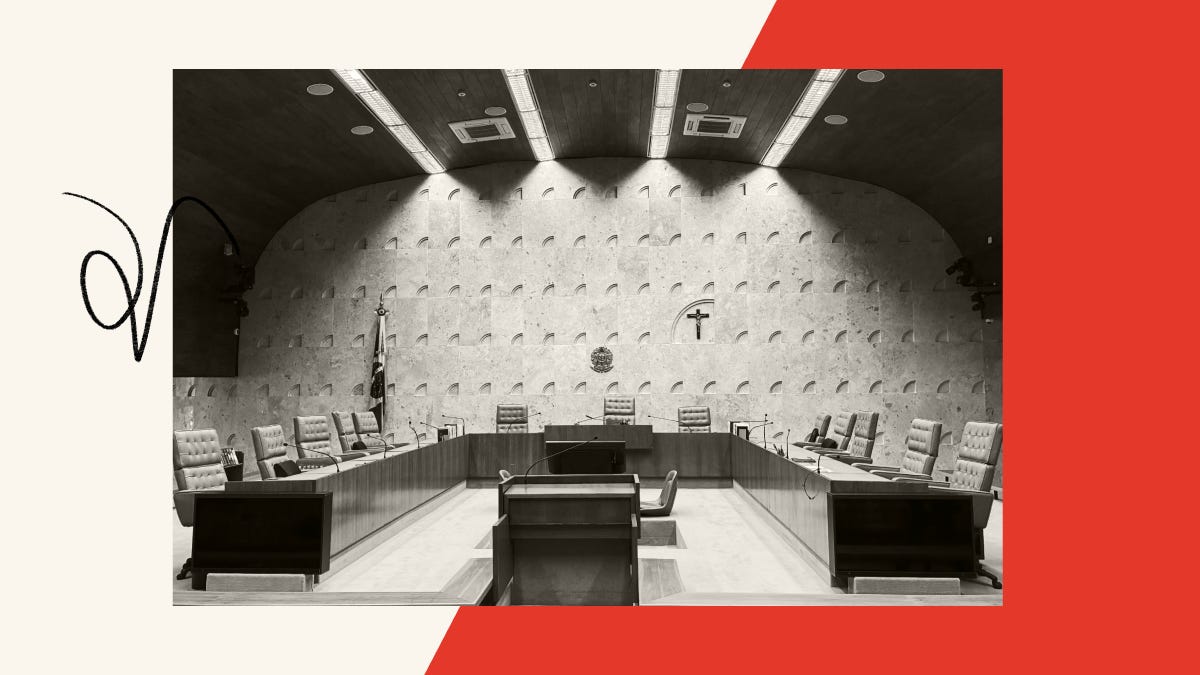
Last month, I traveled to Brasília, the capital of Brazil, as part of a delegation of American democracy advocates. We were there to study and learn from the Brazilian lawyers, judges, and activists who participated in the movement to oppose Jair Bolsonaro and reverse Brazil’s turn towards authoritarianism.
Why Brazil? There are strong points of correspondence between Brazil’s experience with Bolsonarismo and our ongoing struggle with MAGA Trumpism. To name a few:
Like Trump, Bolsonaro promoted traditional gender roles and conservative religion, and opposed LGBTQ+ rights, affirmative action, and abortion rights.
Bolsonaro used his time in power to purge the civil service and appoint loyalists to key positions.
Bolsonaro and his allies spread disinformation about Brazilian voting machines to fuel distrust in the integrity of the election system during the 2022 election.
After he lost the 2022 election to Luiz Inácio Lula da Silva, Bolsonaro attempted to spur a military coup d’etat by instigating his supporters to ransack the Supreme Court, Congress, and the presidential palace in Brasília.

Unsurprisingly, diving deeper into the Brazilian experience complicated the picture. Brazil’s relatively recent experience with military dictatorships and different institutional arrangements stood out as particularly significant to Bolsonaro’s defeat in 2022 and the country’s successful pursuit of accountability for the January 8 attack on democracy.
But despite those differences — or maybe because of them — I think we all left with new ideas, perspectives, and questions to bring to our work on democracy issues here at home.
Here are my three:
One: Democracy seems more valuable when you’ve lived without it
Compared to the U.S., Brazilian democracy is younger and more unstable. The Brazilian monarchy was overthrown and replaced by a constitutional republic (albeit one with highly limited voting rights) in 1889, but the country returned to dictatorship twice more in the next 100 years. The modern Constitution was enacted in 1988, three years after a two-decade military dictatorship was finally overthrown.
When Bolsonaro came to power, he did so in alliance with key factions in the military. He also moved to increase the military’s domestic power. He appointed military officials to major roles in the civilian government, and under the auspices of crime control, he sent federal forces into Rio de Janeiro. (Sound familiar?) And after he lost his reelection campaign in 2022, he collaborated with military leaders to stage a coup and overthrow President Lula. The attacks on the Supreme Court on January 8, 2023 were done in collaboration with some military forces and intended to spur a broader military intervention in the country. (Importantly, the coup plot fell apart because several key military leaders refused to go along.)
All of those developments resonated differently with a population with direct experience with military dictatorship. The movement against Bolsonaro could draw on those experiences in advocating for democracy and the rule of law.
The U.S. doesn’t have a similar recent, universal experience with authoritarianism to draw on. But make no mistake — Jim Crow and segregation were our own form of authoritarianism. And that may explain why Black-led civil rights organizations have been at the forefront of opposition to Trump. Authoritarianism has been overthrown in America in living memory, and that struggle should inform the one we’re living through, even as the Trump administration tries to tell a different story about the past.
Two: Institutional arrangements won’t save democracy on their own
After Brazil’s military dictatorship was overthrown in the 1980s, the drafters of the new Constitution were determined to inoculate it against future attempts to overthrow democracy. Key features of the Constitution were designed with that purpose in mind, and played an important role in slowing authoritarian consolidation during Bolsonaro’s term:
The Constitution forbids amendments to its key democracy provisions: those establishing the federal structure of the country; direct secret elections; the separation of powers; and individual rights. (Otherwise, Brazil’s Constitution can be amended much more easily than the U.S. Constitution.)
Questions of constitutional law can be taken directly — and swiftly — to the Brazilian Supreme Court by any active political party. During Bolsonaro’s time in power, the Supreme Court heard hundreds of challenges to Bolsonaro’s executive orders and other actions, and acted as a major check on unlawful actions.
The Supreme Court has the power to investigate and prosecute attacks on itself as an institution. This enabled the Supreme Court to move aggressively to investigate and prosecute disinformation campaigns against the court during the Bolsonaro regime as well as the attempted coup of 2022-23.
So institutional design was key — and yet Brazilian experts emphasized it was insufficient. The institutions only worked because the people inhabiting those institutions were determined to protect democracy.
That won’t necessarily be true forever. Because appointments to the Brazilian Supreme Court are part of a political process — they work similarly to appointments to the U.S. Supreme Court — its institutions are ultimately also susceptible to political capture. If Flávio Bolsonaro wins the presidential election next month and is able to appoint a few more justices, the Supreme Court may be a much less effective check on future bids for authoritarian consolidation. (And what happens when the Supreme Court tends to be aligned with the authoritarian agenda? Read Justin Florence and Erica Newland on the two-branch doom loop here at home.)
What does that mean for the U.S.? If the elections in 2026 and 2028 create a window to rebuild our democracy, we shouldn’t think that minor institutional reforms alone will be enough to shore up our defenses against another episode of backsliding. Even the most robust checks and balances can fall apart when enough levers of power are controlled by an authoritarian faction.
Rather, permanently closing the door on authoritarianism requires a sweeping program of political, systemic, and democratic change that reorients politics, revitalizes democratic culture, and empowers a new generation of pro-democratic leadership.
Three: A lasting democratic U-turn requires real reform
If there was one essential lesson I took away from the Brazilian experience — and the U.S. one — it’s this: Aspiring authoritarian leaders don’t come out of nowhere. They take advantage of underlying weaknesses in the democratic political system to convince a segment of the population that a different approach is needed. And if we don’t fix those underlying weaknesses, we won’t see a durable return to a fully democratic form of governance (sometimes called a “U-turn”).
Recent research suggests that the vast majority of so-called “U-turns” are relatively short-lived: More than 90% of countries that have bounced back from authoritarian rule have experienced another period of democratic decline within five years.
And it’s unclear whether Brazil will beat that statistic. As of now, President Lula appears to be in a tight race against Flávio Bolsonaro, running on behalf of his father’s far-right party. Even if Lula wins another term this year, our Brazilian colleagues emphasized that 2030 will be another pivotal year. Lula will be term-limited and 84 years old, and he doesn’t have a natural political successor within the Workers’ Party.
In other words, Brazil might be in a situation a bit like the U.S. in summer 2024: With an aging leader unable to run for reelection, few major reforms to the political process completed, and no united pro-democracy coalition ready to block another bid by an authoritarian-minded candidate. And we all know how that ended.
Does that mean we’re doomed?
I don’t think so. But it does mean that if the U.S. successfully makes its own U-turn in 2026 and 2028, there won’t be time to waste: We’ll need to be ready to make meaningful changes, quickly. And that means talking about big reform ideas now, from proportional representation to meaningful court reform. We shouldn’t count on having another chance.
Authoritarian Action Watch updates
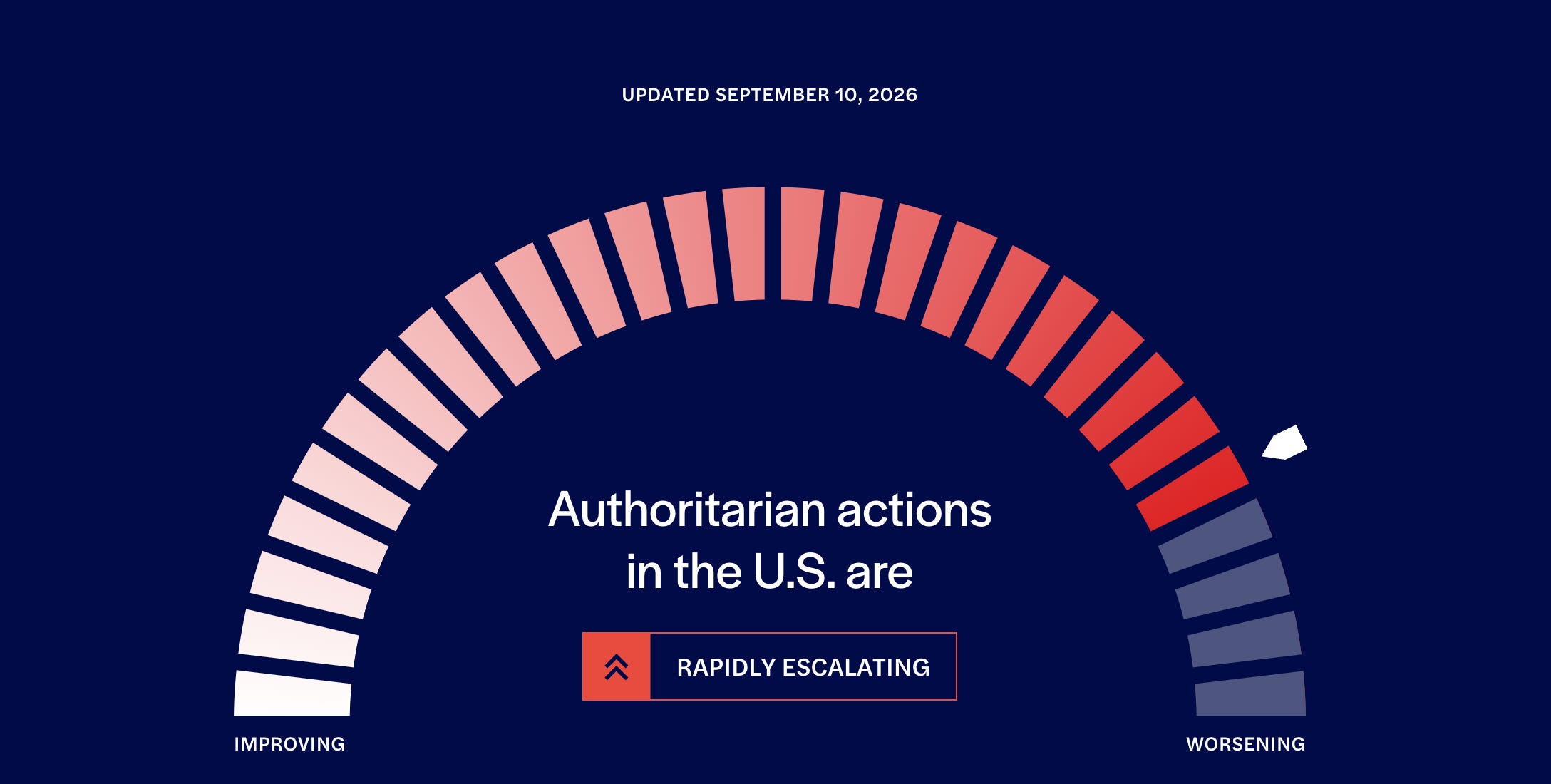
Two other Western Hemisphere stories in our Authoritarian Action Watch updates this week.
First, the president’s announcement that the Pentagon now owns a stake in an obscure Venezuelan oil company — without any consultation with Congress — takes us back to an age of imperialism, and then some. Aggrandizing executive power is RAPIDLY ESCALATING.
Second, Haitian deportees are arriving back in Haiti after the end of Temporary Protected Status for many living in the U.S. The stories are heartbreaking. Targeting Vulnerable Communities is RAPIDLY ESCALATING.
See all the updates in the Authoritarian Action Watch here.
How you can protect democracy #48:
Share global success stories: Around the world, autocrats seek to sideline pro-democracy voices to consolidate and hold onto power. These leaders work tirelessly to project a veneer of invincibility and inevitability to convince the public that resistance is futile.
These stories of autocratic consolidation are just part of the story. We must continue to elevate and share positive examples of democratic “comebacks,” where democracy has won out against autocracy through sustained and creative participation. These wins demonstrate political outcomes are not fixed and that continued civic engagement can shape change over time, encouraging democratic resilience and hope.
This year, Hungarians ousted longtime strongman Viktor Orbán at the ballot box, demonstrating that even after 16 years in the wilderness, pro-democracy forces can stand up and stand firm against seemingly entrenched autocrats.
Start the conversation:
Sharing stories of global democratic resilience — like Hungary’s recent pro-democracy victory — flips the script on the autocrat’s preferred narrative of “invincibility.” These stories are powerful tools to encourage those on the sidelines to get in the fight.
Talk to friends and family members who feel disillusioned by the current state of U.S. democracy, and remind them how pro-democracy movements around the world have stood up to corrupt, entrenched leaders — and won.
Check out these resources:
Is Budapest the bellwether?: A closer look at Hungary’s recent election and what it may suggest about changes in democratic trends, along with context on what the results could mean for the future of democracy.
How democracy survives around the world: A broader look at how democracies persist and recover under pressure, drawing on examples from different countries. It highlights patterns, strategies, and conditions that have helped democratic movements remain resilient over time.
The Hope for Democratic Resilience: A data-driven global analysis showing that democratic decline is not always permanent, highlighting cases where countries have reversed backsliding and moved toward more democratic governance with sustained effort.
Stories of Democratic Resilience: A collection of real-world stories showing how communities around the world, from Ukraine to countries in Sub-Saharan Africa, have strengthened democracy at the local level, even in challenging conditions. It highlights how participation, collaboration, and local action can help democratic systems endure over time.
There are over 100 more ways to help: How you can protect democracy.

Great article. We must get ready now and there is no time to waste. On reforms needed quickly, getting money out of politics strikes me as at the top of the list, including overturning Citizens United. Hard, yes. Impossible, no. Necessary, absolutely.
Such important observations—thank you!