


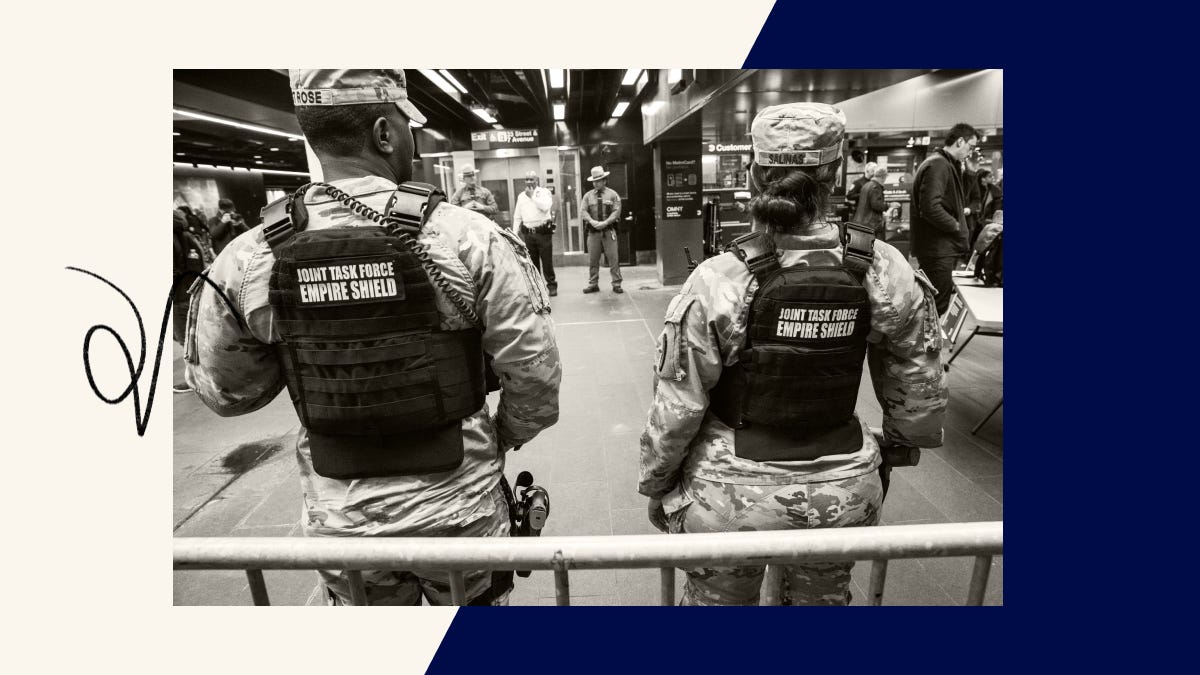
Earlier this week, Nashville, TN; Columbus, OH; El Paso County, TX; and Harris County, TX sued the Department of Homeland Security with a devastating accusation.
The federal government is withholding hundreds of millions of dollars in unrelated terrorism prevention funds unless state and local governments significantly change their election procedures. The only way to get the money released is to show “proof of compliance.” The criteria are vague. The threat is not.
This is a dark but predictable escalation in the administration’s deceive, disrupt, deny strategy against the elections. Foiled so far in Congress and the courts, Trump is reaching for any lever he can find to try to block the possibility of the opposition winning in the midterms. (If you’ve followed this newsletter for a while, you get it.)
Said Columbus City Attorney Zach Klein:
“Holding cities hostage by threatening anti-terrorism funding if they don’t go along with the president’s absurd election manipulation is as dangerous as it is illegal.”
(These cities and counties are represented by Protect Democracy along with the Brennan Center for Justice, Public Rights Project, and the Jacobson Lawyers Group. Read more about the lawsuit here.)
There’s so much legally and practically wrong here. We’re 75 days from the election. Trump is trying to coerce massive, last-minute changes to election procedures. He’s deliberately undermining trust in our elections. It’s going to affect both red and blue states. The timeline is so short and criteria so unclear that capitulation may not even be possible. He’s flagrantly threatening to hold back funds used to keep people safe. This money isn’t even his to withhold — Congress appropriated these funds. He’s trampling on both states’ constitutional authority over elections and Congress’ power of the purse.
And yet none of that is the worst part.
The first iteration of these grants was established in the months after September 11. Lawmakers sought to use federal funds to help state and local governments shore up vulnerabilities to terrorism and other threats. Over the last two and a half decades, tens of billions in grants have played a key role in helping prevent another attack.
In his desperate rush to try to break the midterms, Trump is carelessly picking up and throwing everything he can find. Now that even includes public safety.
Donald Trump has a pattern of weaponizing aid and disaster prevention
This is not the first time that the administration has weaponized disaster aid and prevention.
The following might be the most scandalous graph from Donald Trump’s presidency. It comes from this reporting by POLITICO:
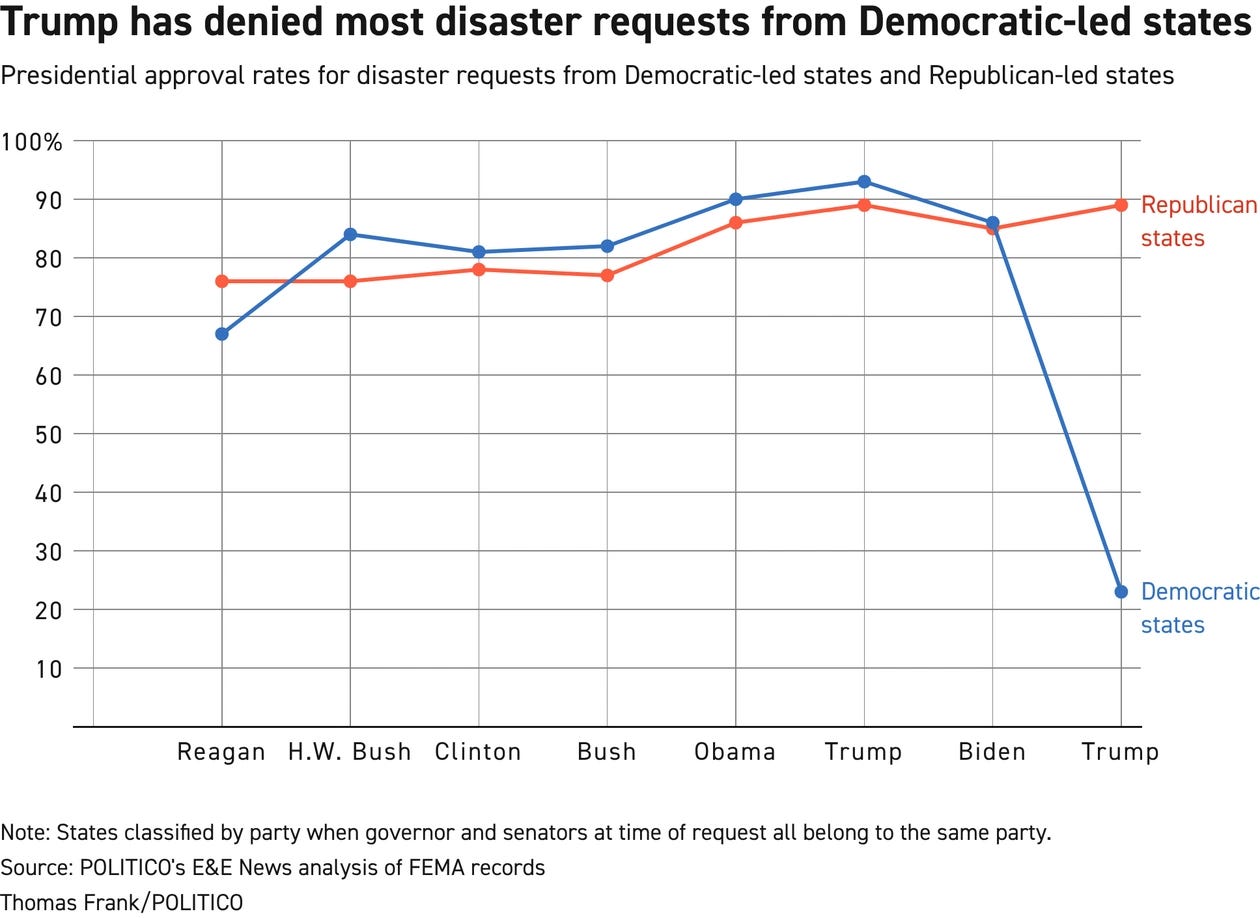
Before last year, whether it was wildfires in blue states or hurricanes in red ones, presidents of both parties fairly and consistently evaluated requests from states for disaster aid. We may fight over policy, but when people’s lives and homes are on the line, past leaders kept partisanship out of it.
And then Donald Trump returned to the White House.
Suddenly, a pattern emerged. When disaster aid requests came from Republican governors, they were almost always approved. But if a blue state was asking?
First, the White House took twice as long — an average of 80 days — to act. Then over three-quarters of requests were denied. 23 percent approval for Democratic-led states vs. 89 percent for Republican-led ones. These rejections, POLITICO’s reporting found, directly overruled Trump’s own FEMA staff’s assessments.
(Since POLITICO first published its reporting, perhaps because of it, Trump has approved a few more requests from Democratic states — but the disparity is still striking.)
Naked weaponization of national security is not just wrong and illegal — it’s also bad politics
It’s worth asking why no modern president before Trump did anything like this. Why were certain things at least publicly off limits?
I don’t think it was just the law and morality. I think it was also, fundamentally, about politics.
There’s a classic economics paper from 2003 that found a political pattern in FEMA disaster aid approvals even back then — but it wasn’t against anyone. Rather, decisions tended to go in favor of swing states and districts represented by powerful members of Congress, regardless of party. Politics may have always been part of it, just not the retribution.
The real difference was that no leader before Donald Trump would have wanted to go anywhere close to deliberately weaponizing public safety against certain states or cities. They rightly understood that some levers are not to be pulled. They knew an elected leader didn’t want to be seen playing brazen political games with disaster victims or with national security.
That’s why I believe Trump’s attempts to weaponize anti-terrorism funding, like so many of his administration’s worst abuses, will backfire. (If you read my piece last week, apologies for hammering on this.) It’s not just illegal and immoral; it’s also terrible politics.
Why do I think that?
Look at how even Republicans in Congress are responding to Trump’s weaponization. POLITICO, again, two days ago:
Republicans and Democrats may have a bipartisan recipe for disaster aid.
In a rare push, congressional lawmakers from both parties are wrangling legislation that aims to take politics out of federal cash for devastating storms, wildfires and other natural catastrophes, as Andres Picon writes. They are working to include the proposal in the Senate’s forthcoming defense policy bill.
[Read the whole story.]
Maybe some things really can be off limits again.
Three notable updates in our Authoritarian Action Watch this week.
First, everything above about DHS grant funding: This weaponization is abhorrent, but also represents a growing sense of desperation in the administration’s strategy against the midterms. They keep losing in courts and Congress — and now cities like Nashville and Columbus are pushing back. Because of that, we rate Corrupting Elections as IMPROVING.
Second, two conflicting stories in Quashing Dissent. In a positive direction, one of the FCC’s most prominent and powerful targets, ABC and it’s parent company, Disney, hit back this week. Very big news. (If you missed my colleague Rachel’s article earlier this week on how Congress can stop this from happening again, it’s worth your time.) But in the other direction, new disclosures reveal DHS started an expansive surveillance program at the height of ICE protests in Minnesota last year. Those net out at NO CHANGE.
Finally, the administration’s attacks don’t get as much press these days, but the Targeting of Vulnerable Communities is still RAPIDLY ESCALATING. Read why.
Overall: ESCALATING.

Read more about the Authoritarian Action Watch and see all the ratings here.
How you can protect democracy #92
Know the voting rules in your state: Knowing the rules where you live is one of the most practical things you can do to prepare for an upcoming election. Registration deadlines, ID requirements, mail ballot rules, and early voting periods are all determined at the state level and vary — and getting these details wrong can mean missing your chance to vote.
The Fair Elections Center is a nonpartisan voting rights organization that has developed free, state-specific voting guides covering everything you need to know ahead of an election, from registration and mail ballot deadlines to how and where to register, including answers to common questions for students and first-time voters.
What you can do:
Find your state’s voting guide on the Fair Elections Center’s interactive map and save the key dates and deadlines for the general election.
Check whether you need to register for the first time, update your address, or request a mail ballot — and do it before deadlines sneak up!
It’s also worth checking your registration more than once, as voter rolls are updated periodically and confirming your status closer to Election Day takes just a minute.
Share your state’s guide with friends, family, or community members who want to make sure they’re prepared, especially students and first-time voters.
Extra Credit: Download your state’s Voter Registration Drive Guide to learn how you can help others register in your community.
Our how you can protect democracy playbook has four new concrete actions added this week. They range from a few minutes to a few hours. See them all here.
Final things: Protect Democracy is suing DHS for failing to release records on whether taxpayer dollars and special access were used to manufacture favorable coverage (while shutting out independent reporters). Some interesting follow the money hits here via OpenOMB.org. Lutnick’s 2020 election report is junk data science.
Stay safe. See you next week.
Thank you, Mr. Raderstorf.