


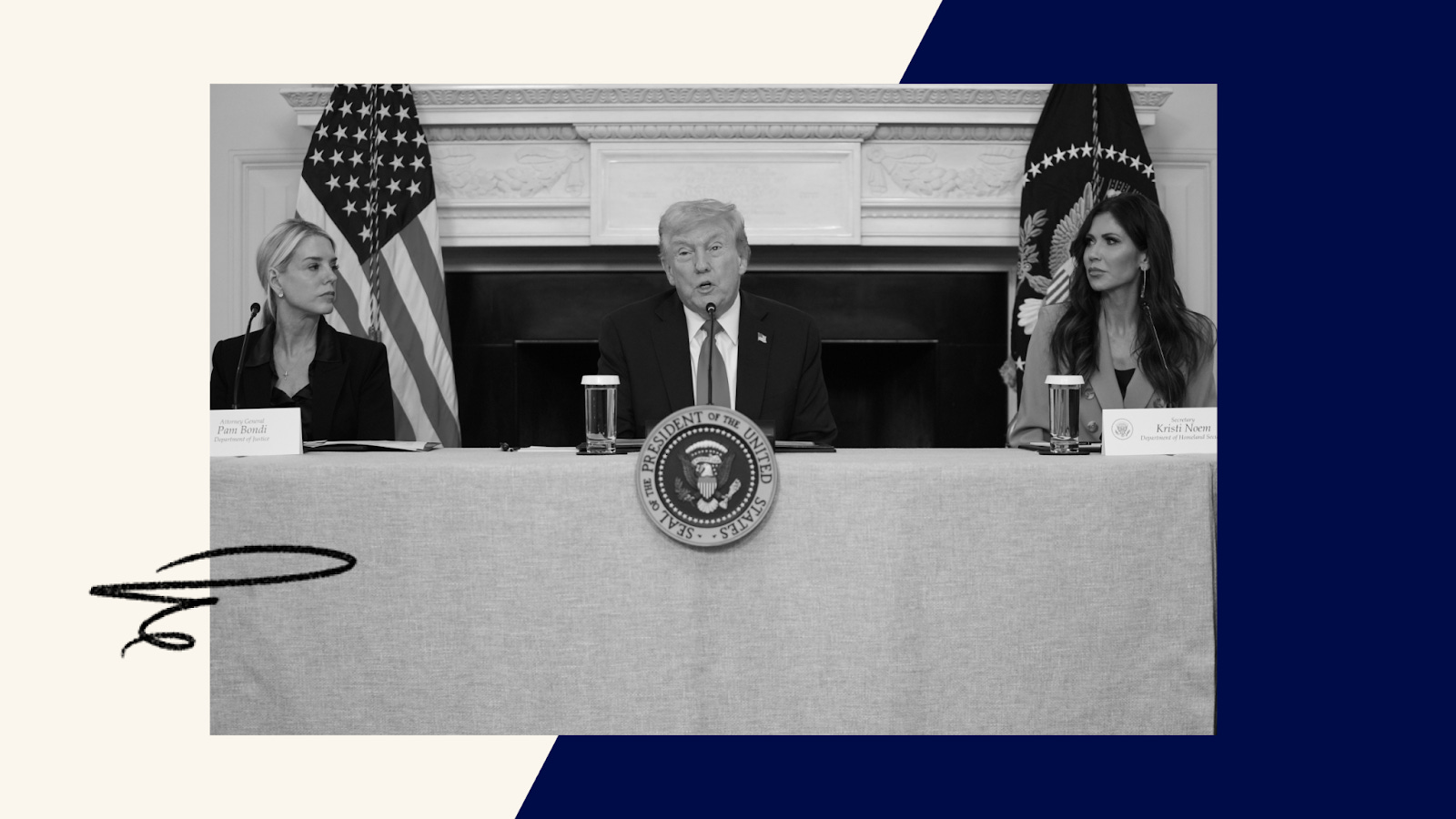
In February, Ansley Skipper and Ben Berwick wrote about a “three-headed monster heading for our elections.”
The combined forces of the Justice Department, Department of Homeland Security, and the Office of the Director of National Intelligence (ODNI) are shaping up to be the Trump administration’s election subversion Chimera (that’s the fire-breathing lion-snake-goat hybrid creature from Greek mythology) in 2026.
Ben and Ansley’s argument was, essentially, those three agencies represent the apex of the administration’s powers over law, violence, and propaganda. And so they form a powerful wedge that can — and will — be directed at the midterms.
In the two months since, two of the three heads of those agencies have been fired.
Kristi Noem was ousted from Homeland Security on March 5 and Pam Bondi was fired as Attorney General effective yesterday. The third head, Tulsi Gabbard at ODNI, is on the rocks as Trump polls his advisors on replacing her, The Guardian reports.
There are three ways to read this turnover in the Chimera triumvirate:
This is a positive development because it shows how badly Donald Trump’s efforts to entrench himself in power are floundering. In desperation, he is firing the people who were tasked with punishing his perceived enemies and protecting his party from future accountability at the ballot box.
This is a dangerous development because the president will now hand the Chimera to new leaders even more willing to abuse power, people like Acting Attorney General Todd Blanche who was Trump’s personal lawyer and point person for retaliatory prosecutions.
This is a sideshow — it matters much less who is in charge of the Chimera than whether our system can stop it. Bondi and Noem’s shortcomings weren’t that they were insufficiently zealous (by all accounts, both were willing to go to whatever lengths to please the White House). They came up short because the legal system and the American people successfully pushed back on their abuse. None of that changes with new leadership who will now face the same substantial obstacles.
What does it mean when an autocrat fires his enforcers?
As usual, it’s hard to know if Trump’s setbacks are truly victories for democracy.
Yes, it’s good news that Noem and Bondi (and potentially Gabbard next) failed in the task the president set out for them: to bring vengeance to his enemies.
But Bondi and Noem were failing to translate the weaponization of their departments into the revenge Trump was hoping for. That’s not a bad thing. And now they’re gone. If the White House is able to install new leadership even more willing to break the law, then they may be able to get their entrenchment agenda back on track.
Or it may not matter either way. The question of who leads the Chimera may be immaterial to whether it succeeds.
When the authoritarian fires his enforcers, should we celebrate? Should we be worried? Should we even care?
The truth is: It’s kind of all three. All of those interpretations are true. Bondi’s firing, like Noem’s before her, is a clear indicator that authoritarianism is losing. At the same time, new leadership may find new ways to succeed. And most of all, the functionaries in charge of the effort to undermine elections aren’t as important as what the rest of our democracy does in response.1
Bondi and Noem didn’t simply fail. They were defeated by a legal and political system that refused to allow them to politicize justice, weaponize law enforcement, and corrupt elections. The pushback is working! But just as there is no superhuman autocratic henchman who can magically entrench the president in power through force of will, there’s also no silver bullet to prevent that entrenchment from happening.
All of us, collectively, need to be even more on guard to protect the election from the three-headed Chimera — especially now that it’s going to have new leaders.
How to protect the midterms from the Chimera
So how do we stop the new-look DOJ, DHS, and maybe ODNI (as well as the rest of the federal government) from successfully meddling in the midterms?
Same strategy as before. Everyone in the United States who believes in free and fair elections needs to be committed to these four things.
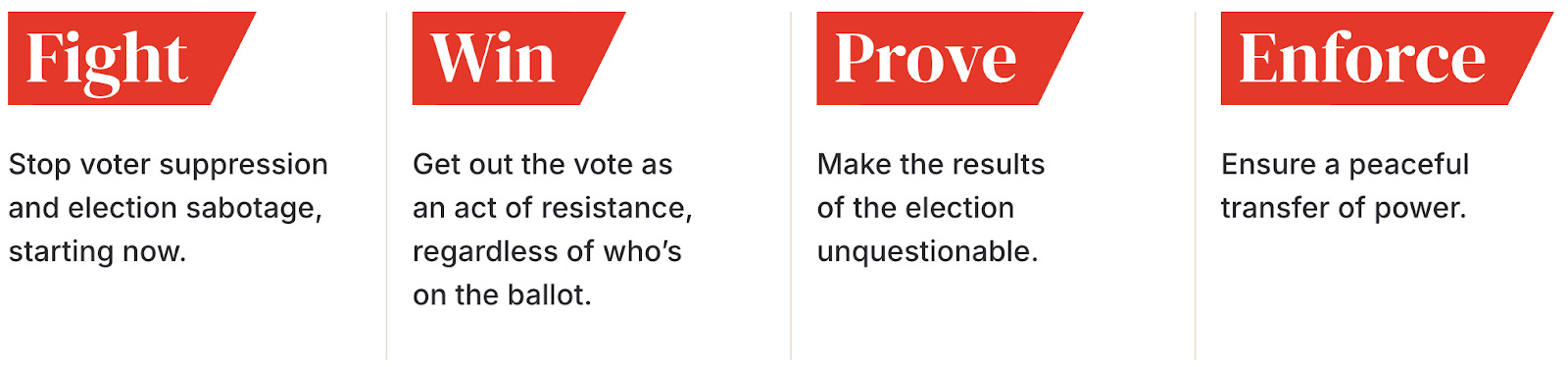
First, fight the Chimera at every step. Legal, political, communications, and protest strategies need to push back against every abuse. (For instance, as Barb McQuade writes, the Senate now gets a do-over confirming an Attorney General who will uphold the rule of law.)
Second, make the midterm elections the loudest celebration of democracy in American history. Federal agencies like DOJ, DHS, and ODNI can only corrupt the election on the margins; they’re likely powerless against overwhelming turnout.
Third, defend the integrity of the results. Together, we can make them unquestionable and widely accepted.
Fourth, enforce a peaceful transfer of power from this Congress to the next one.
For more recommendations on how different groups — from local officials to civil society to citizens and voters — can do all those things, read Executive Override, our 2026 election report.
Push back against DOJ overreach, today
The Department of Justice published a proposed rule that would allow the Attorney General to intercept and indefinitely delay state bar investigations of current and former DOJ attorneys. This would effectively place an entire class of government lawyers above the disciplinary framework that governs every other member of the bar.
Some of our partners have developed a template for anyone interested in submitting their own public comment opposing this dangerous proposed rule. (Also see: Protect Democracy’s guidance on what makes an effective public comment.)
Individual, personalized comments carry significant legal weight — agencies must respond to every substantive comment, and the record created now will shape any future litigation. The deadline to submit comments is April 6, 2026.
Protect Democracy sues DHS over warrantless home entry memo
One example of fighting the Chimera: Yesterday, Protect Democracy and partners sued DHS — on behalf of immigrants and U.S. citizens in Minnesota whose homes were searched — over a secret internal memo directing ICE agents to enter and search homes without a warrant.
Read about the lawsuit in The New York Times here and read our statement here.
Said Kristy Parker in the Times:
The Constitution creates a system where we don’t give law enforcement officers — just because they wear badges — unbridled power to seize people on the street or go in their houses… They do have power when they have proper cause to do it, but the Constitution requires them to go outside of the executive branch to another branch of government to have their case assessed, so that there’s some sort of reasoned, neutral inquiry.
This constitutional requirement is especially robust when it comes to the government entering people’s homes. Doing so has long required government agents to get a judicial warrant. That’s not what DHS has been doing. And so our clients are suing.
Is it safe to use Signal?
Sharing information is key to collective action, and in the modern fight against authoritarianism, that usually means communicating online.
Signal has become a critical messaging platform for protesters in Minneapolis and other coalitions across the country. Following reports of groups being infiltrated, though, it’s also fair to wonder whether Signal is safe to use.
In a new piece for the Foundation for Individual Rights and Expression, Adam Goldstein shares guidance on whether Signal is a safe tool. Thankfully, Signal is quite safe, even if it’s not foolproof. As he puts it:
Don’t commit crimes, because you’ll get caught. That’s got nothing to do with Signal though. Signal’s fine.
For more on how coalitions can operate safely and securely, read Protect Democracy’s guide →
A time of Major Questions
This week, the Supreme Court heard arguments in a case that could fundamentally change how citizenship works in the United States. Regardless of the outcome, it’s a startling reminder both of how much power the Court claims to wield and of the fragility of the Court’s legitimacy as it weighs how much to empower an autocratic White House.
The Court does not have to be this way. This week, friend of Protect Democracy Jesse Wegman (a former member of the New York Times editorial board) launched a new Substack with the Brennan Center all about the Supreme Court. Major Questions will analyze everything from major decisions to ways reformers can reestablish the Supreme Court’s independent role in our democracy (as well as its standing with the American public). It’s immediately a must-read for me.
Subscribe to Major Questions.
How you can help:
Protect Democracy advisor Rachel Kleinfeld has a wonderful new piece on the concrete way every American can fight for democracy between elections. The big takeaway? It’s all about eroding institutional support for authoritarianism:
The number one thing regular people can do is figure out where they are in relation to a pillar of support [for authoritarianism] — think businesses, professions, religious groups, or community organizations and start doing things that might persuade those people or organizations to step away.
As Kleinfeld writes, this is an exercise in empathy, and often a difficult one. But it’s also among the most effective ways to break up authoritarian consolidation.
Explore Protect Democracy’s database of ways to help →
It should also not be lost on anyone that Trump is firing the women in his cabinet. That's not to defend or condone their misconduct, their abuse of power, their sycophancy, or their incompetence. But Trump's targeting of them also carries an unmistakable streak of misogyny.
They were replaced by people who are just as bad, if not worse.
He’s going after the women. What about Kegsbreath? Patel? They need to go.