


This week, the Trump administration sent agents from Homeland Security Investigations, a unit within Immigrations and Customs Enforcement (ICE), to raid Representative Ilhan Omar’s house in an attempt to cast doubt on her and her family’s citizenship status.
Rep. Omar has been an American citizen for 26 years. Federal law enforcement has a longstanding practice of not conducting high-profile actions within two months of Election Day. The raid was only 22 days before Election Day.
For the Trump administration, the Department of Homeland Security is the weapon of choice when they’re trying to intimidate voters and political opponents. DHS’ budget has ballooned and its ranks have been filled with many who are subservient to the president’s political aims, rather than to their supposed purpose of non-partisan public safety. Meanwhile, the department — and ICE in particular — has become notorious for its willingness to use violence and spread fear.
In this context, the raid on Rep. Omar’s home is a textbook example of a retaliatory and abusive investigation.
To be clear, Trump is unlikely to get what he is hoping for here, either politically or legally. The investigation against Rep. Omar seems to be rooted in the president’s racist conspiracy theories, not credible claims of wrongdoing. And yet, DHS’ latest politically motivated abuse raises a question: If DHS can target a member of Congress on the eve of an election, what stops ICE from showing up at local polling places on Election Day?
A substantial portion of Americans are worried about the possibility.
In a recent poll, over 40% of surveyed Americans said that they expected to see ICE agents at their local polling place. Unsurprisingly, Americans of color feel particularly on edge: 39% of Asian American, 31% of Hispanic, and 24% of Black respondents agreed with the statement “I worry that going to the polls could put me at risk of being questioned by federal immigration officers, despite being a US citizen” — compared to only 9% of White Americans.
But while it’s understandable to worry about what the Trump administration might do, any attempt to deploy ICE or DHS agents to polling places is very likely to fail.
So why does the Trump administration keep hinting that they might try?
The Trump administration wants to scare us
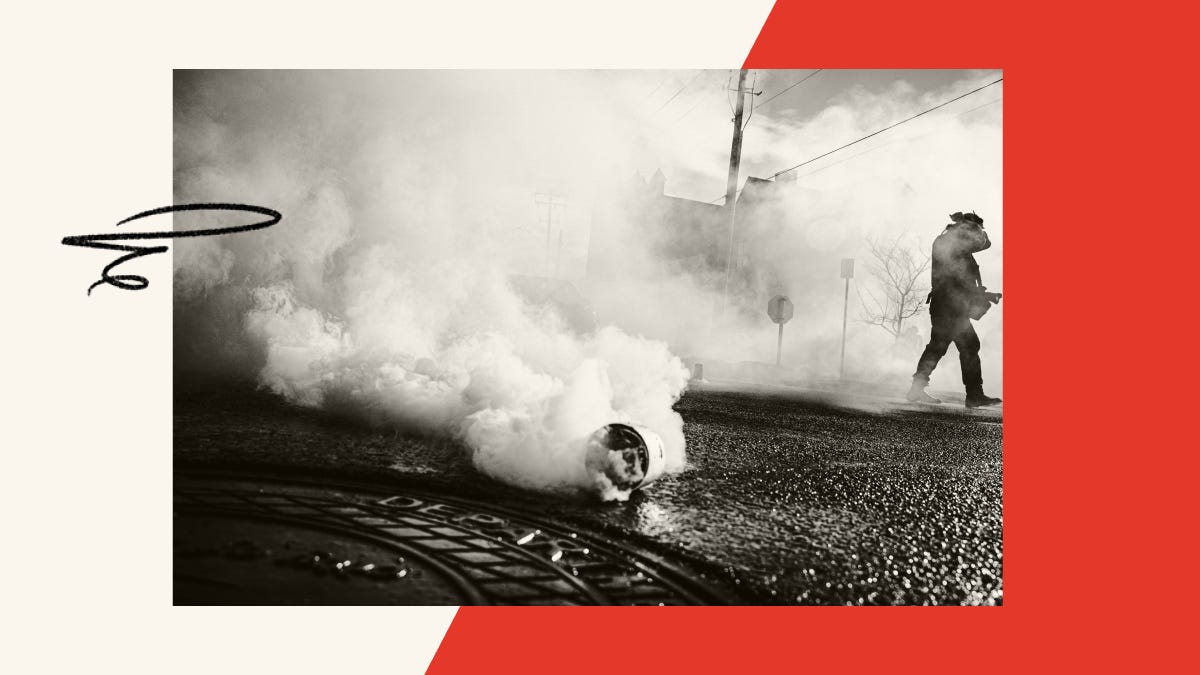
Last weekend, brimming with Halloween spirit, I went to a haunted house. It was terrifying, but most of the illusion — most of the haunt — came from a simple trick: Smoke machines. Each room was blanketed in synthetic fog, which covered up reality and made the horror feel real.
In their way, authoritarians love smoke machines.
They generate a cloud of fear and confusion so thick that it obscures what they can and can’t actually do, making their reach look infinite and overwhelming. When Trump blusters, in response to a question about whether he’d send ICE to the polls, that he’d do “anything necessary,” he’s turning the smoke machine on high, hoping the haze makes us too afraid to show up.
This is classic “Deceive, Disrupt, Deny” — the three-party strategy we keep pestering you about because, well, the administration keeps using it.
But smoke machines have two big weaknesses. First, smoke can’t pass through a solid wall. In our democracy, state and local authority over election administration and strict legal prohibitions against armed agents at the polls are those walls. Second, we as Americans don’t have to sit passively, overwhelmed by the haze — we can clear the air. When we learn our rights, help our neighbors get to the polls, and make an effort to see through the lies, we blow away the smoke.
Clearing the smoke doesn’t mean there’s no threat underneath. But it allows us to see the authoritarian at his actual, human size, and realize that the power to protect this election remains firmly in our hands.
The law is so freaking clear: Armed agents are prohibited at polling places
Don’t be deceived by the smoke machine; bluster isn’t legal authority.
States run elections. The federal executive branch does not. Full stop. State and local election officials, laws, and regulations govern who is allowed at a polling place, so federal agents can’t simply march in and take over without violating state sovereignty.
Generations of Americans have fought to ensure our legal system protects against such efforts to intimidate voters or interfere with free elections. In response to our country’s dark history of voter suppression against Black Americans and other voters of color, Congress and state legislatures built a robust legal framework specifically designed to keep troops, law enforcement, and private militias far, far away from the ballot box.
Since the end of the Civil War, it has explicitly been a felony to order or keep “armed men” at election sites. Since DHS officers (including ICE agents) are required to be armed on duty and act under executive authority, this means that, by definition, they’d fall under this law. And it’s not just the agents that would be violating the law — the officials who order the agents would be subject to criminal prosecution. A violation of this law carries serious consequences, including imprisonment of up to five years and being barred from holding office again.
Sending ICE even into the general vicinity of polling places, drop boxes, and other election sites could also violate longstanding laws against voter intimidation. For instance, Section 11(b) of the Voting Rights Act and U.S. criminal code both prohibit any attempts to intimidate, threaten, or coerce voters. And crucially, it’s the attempt itself that’s unlawful, not the outcome. Regardless of whether ICE agents physically turn away anyone from the polls, their very presence at or near polling sites would likely be considered intimidation of voters and a violation of the law.
Now, if you’re skeptical that the current, nauseatingly politicized Department of Justice would go after violators of these laws, I don’t blame you.
But here’s the legal beauty — even if the current DOJ doesn’t prosecute, the statute of limitations for these criminal prohibitions runs up to five years, meaning that the next administration’s Department of Justice still could. And, in the meantime, states could prosecute violators under their own laws. And nonprofit organizations (including ours) have already brought civil cases to halt ongoing efforts to intimidate voters and interfere with elections.
Together, we can stop DHS interference
Before I get into what to do about it, it’s worth noting the political reality: Actually sending ICE to the polls could very well backfire.
The midterms aren’t just a day, but a period — more than 7 million Americans have already cast their ballots. And Trump’s supporters, not opponents, are more likely to vote on Election Day itself, meaning that any attempt to snarl or disrupt last-minute voting could easily have the opposite effect to what the Trump administration intends. Plus, ICE is extremely unpopular, and any election-related abuses are likely to spur public backlash — which could itself motivate more people to vote.
Maybe that means the Trump administration will back off its threats to send ICE agents directly to the polls. The recent surge of ICE activity in California suggests their strategy may be to use ICE presence in communities generally, rather than at the polls specifically, to terrify voters into staying home. The confusion, intimidation and fear is the point. Trump is attempting to threaten and intimidate Americans, especially naturalized Americans and Americans of color, into not exercising their fundamental right to vote.
It’s an ugly tactic, but it’s hardly new.
The smoke machine is designed to overwhelm us, but together we can clear the haze. We have lots of tools to fight back. To name just a few:
Exercising your rights: Make a plan to vote, if you haven’t yet, and track your ballot if you have. The earlier you vote, the sooner you’ll know your vote has been counted.
Being a breath of fresh air for others: Help reassure and support others in your life who may be afraid. (You can use this handy guide my colleague Ben published last week!)
In doing so, it’s important to recognize the very real basis for this fear — ICE has been menacing communities, using violence, and crossing legal boundaries. The law itself won’t be enough to make people feel protected at the polls, and understandably so. So think about how you can serve as a resource to help those in your community vote safely and freely (Protect Democracy maintains a list of specific ways to do this).
Documenting and reporting: If you do see something that looks amiss at or near an election site, know that there are resources to help. Make sure to document anything worrying that you see — this can be evidence for investigators later on. You can call 866-OUR-VOTE to speak with trained Election Protection volunteers.
The Trump administration is not as powerful as they want us to think they are.
Let’s shut off the smoke machine.
Authoritarian Action Watch updates
Two events to note in the Authoritarian Action Watch this week.
First, the raid on Rep. Omar’s home is both a sign of a floundering presidency and a blatant attempt to demonize and frighten naturalized citizens. Quashing Dissent is RAPIDLY ESCALATING.
Second, in a related incident, Donald Trump posted a Truth Social post saying: “The once Great State of Minnesota is being taken over by Somali Immigrants. There is Violence, Murder, and Mayhem all over the State. The people of Minnesota must fight back… The Somalians should not be allowed to get away with what they are doing. They view you as weak and stupid people. Fight back Minnesota, fight back!” Stoking Violence is also RAPIDLY ESCALATING.
See all the updates: Authoritarian Action Watch.
How you can protect democracy #101
Register your community to vote 🗳️ Communicating with your network about when and how to vote — and making sure everyone you know is registered — is one of the most direct ways to strengthen participation in our democracy. Millions of eligible voters aren’t registered, and many registered voters have outdated information that could prevent them from casting a ballot. With registration deadlines for the November 3rd general election approaching in many states, now is the time to check and help others do the same.
What you can do:
Check your voter registration status to make sure your name and address are current — and check more than once, as voter rolls are updated periodically.
Register to vote if you haven’t already, and help someone in your life do the same, especially anyone who has recently moved, changed their name, or will be voting for the first time.
Find your state’s registration deadline and sign up at Vote.org to get reminders of upcoming deadlines.
Send your contact list accurate information about the upcoming election well before the registration deadline — a simple text or email can make all the difference.
Use The Civics Center’s guide to plan and run a voter registration drive in your school, community, or workplace. It includes step-by-step guidance, training workshops, and social media templates.
Download your state’s Voter Registration Drive Guide for state-specific rules, requirements, and guidance for drive organizers.
Read and share Protect Your Vote: A Citizen’s Guide from the Elections Group — download and print the pocket-sized version to share with people in your community.
Should anyone have problems with voting, share the Election Protection Hotline numbers: English: 1-866-OUR-VOTE | Spanish: 1-888-VE-Y-VOTA | Asian Languages: 1-888-API-VOTE | Arabic: 1-844-YALLA-US

Plus, they couldn't be at every polling place in the country. There are not enough of them.