


The U.S. Department of Education’s recent decision to investigate the National Study of Learning, Voting, and Engagement (NSLVE) didn’t make many national headlines, but perhaps it should have.
For over a decade, NSLVE has been the gold standard for nonpartisan research into college civic learning and engagement. This investigation — thinly veiled as a concern for student privacy — threatens to dismantle an essential academic framework. By centering on alleged violations of the Family Educational Rights and Privacy Act (FERPA) — the federal privacy law carrying the same institutional peril as a HIPAA violation in medicine — the department is launching a calculated assault on the right of universities to measure their own civic and educational outcomes.
Is measurement a crime?
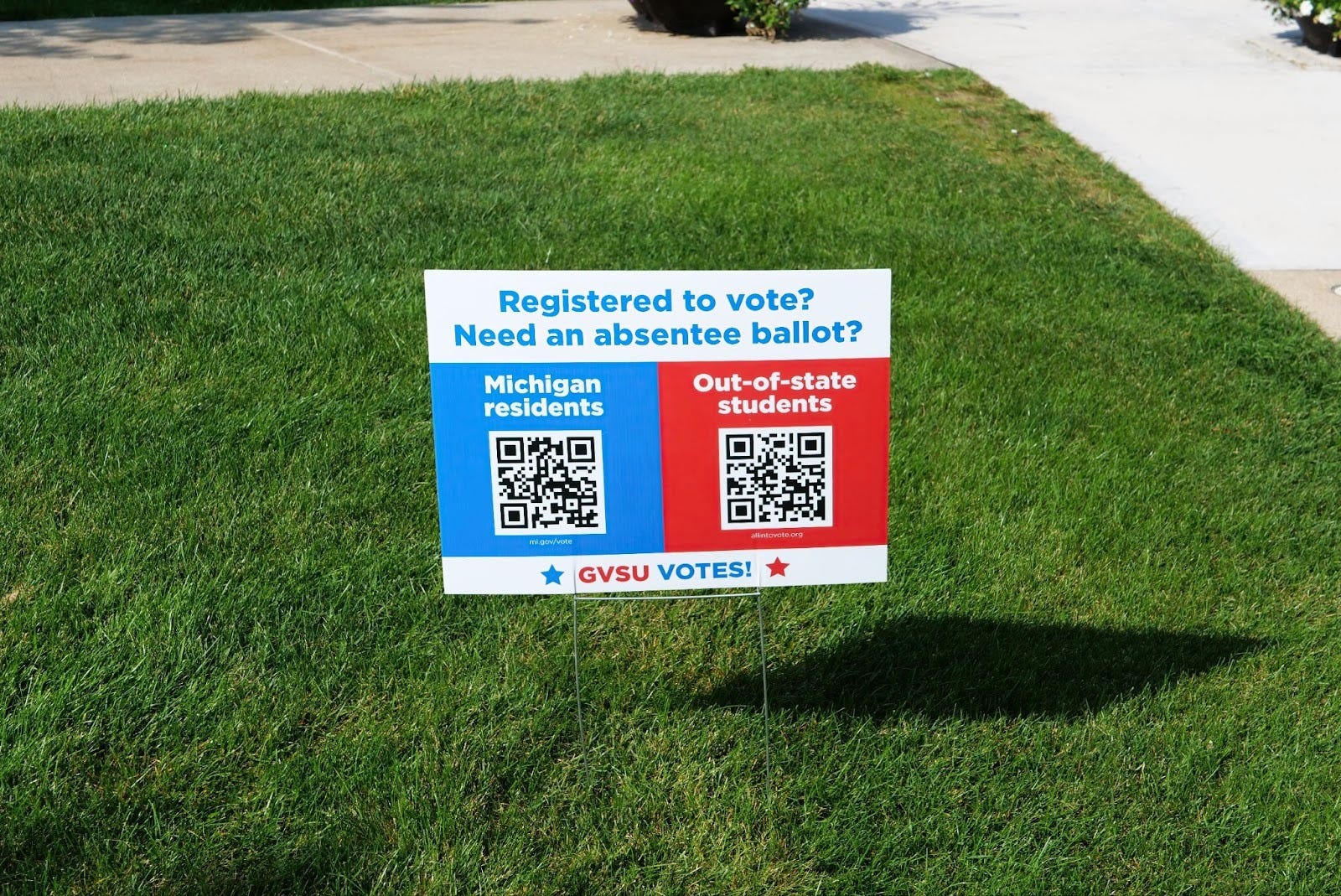
American universities are required by law (the Higher Education Act of 1965, as amended) to help students register to vote. But the effort to engage students in democracy on campus is driven by more than just a legal mandate. Many institutions explicitly name civic knowledge and democratic participation as central to their educational mission. Just as a chemistry department uses exams to measure a student’s subject matter expertise, a university must use data to measure a student’s mastery of participation in our democracy. Before NSLVE, which was launched in 2013, colleges and universities had no empirical way to measure the success of their civic engagement efforts. NSLVE has bridged this gap and provides data-driven insights to over 1,000 U.S. colleges and universities, allowing them to understand and improve student learning and civic participation on their campuses.
This study has transcended partisan lines, earning the endorsement of both Democratic and Republican administrations alike. For years, the federal government has actively encouraged participation in this study because NSLVE has proven to be a trusted partner with a process explicitly designed to be FERPA compliant.
NSLVE’s structure and policies have always prioritized student privacy. In fact, NSLVE never handles identifiable student information. It utilizes de-identified records from the National Student Clearinghouse and has no way of knowing if or how any specific student voted. The study does not share individual student data with any participating campuses or political or non-political third parties. And results are strictly limited to national trends or confidential campus-level reports, ensuring that no individual student can ever be identified.
A pattern of anticipatory obedience
Given this structure, the department’s claim that NSLVE data is being used by “political organizations to influence elections” is functionally impossible. But that impossibility is beside the point. By threatening to pull federal funding, the administration is seeking to create a state of anticipatory obedience, a move pulled straight from the authoritarian playbook.
“Creating an environment of fear and division is key,” writes our colleague Shanna Singh Hughey in her piece on anticipatory obedience. “People under threat naturally do what they can to avoid injury and maximize their chances of survival. And they do the same for the organizations they run.”
Read more: Reversing the vicious cycle of anticipatory obedience.
In this case, when the Department of Education warns that any school using this year’s data “could be at risk” of a FERPA violation, they aren’t seeking a legal victory; they are seeking a chilling effect. They want university lawyers to preemptively pull out of the study rather than risk their entire budgets on legal battles or cuts in federal funding. If they succeed, it will force a massive retreat from civic programs in the middle of a major election year, effectively gutting the infrastructure of youth participation in our democracy.
This is not an isolated incident. It is the latest in a series of moves designed to make it harder for universities to promote nonpartisan civic engagement. Last summer, the Department of Education prohibited universities from using federal work-study funds for nonpartisan voter engagement. And on the very first day of this administration, the president revoked the executive order that had directed federal agencies — including the Department of Education — to promote nonpartisan voter registration. It’s hard to view these actions as anything other than the administration trying to prevent more voters from voting.
The impact is the intent
Of course, if the real goal is to create a climate of fear, the legitimacy of this investigation would be irrelevant to its authors, who are seeking to delegitimize civic life and reframe the simple act of voting as a partisan threat. Whether through the quiet bureaucracy of a FERPA probe or by threatening the presence of ICE officers at the polls, the intent remains the same: to erect as many barriers to participating in our democracy as possible.
So while this technical investigation into data privacy may not have dominated national headlines, we still need to pay attention. This serves as a critical data point in the administration’s escalating use of the vast powers of government to target its perceived political opponents and ongoing efforts to suppress participation, and a reminder that not all authoritarian election rigging happens out loud. The current administration is using every small lever, every instrument at their disposal to choose its voters, out of fear that voters would choose their opposition.

