


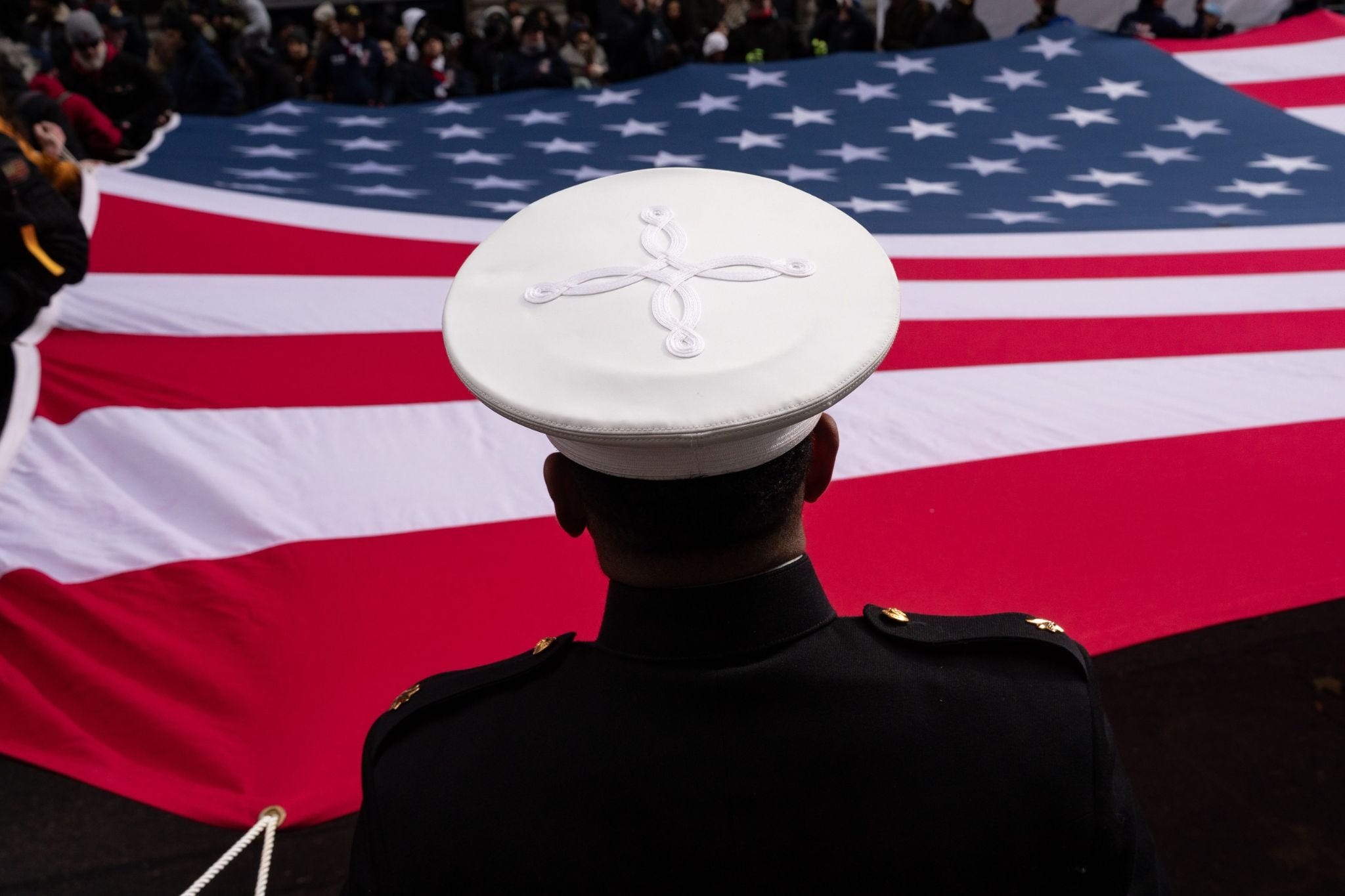
On this Veterans Day, we’re thinking about an oath each of us swore: to support and defend the Constitution. One of us took it as an enlisted sailor straight out of high school. Another took it as a Navy officer stationed around the world. The third took it as an Air Force judge advocate. None of us swore allegiance to a party or a president. That is a distinction this administration has tested and tried to circumvent, but it is essential for an effective military.
In the wake of the midterms, Pete Hegseth’s future as the secretary of defense is a live question. Whatever happens, today is a moment to reflect on what the last couple of years have meant for the people who serve.
America’s military is meant to sit apart from partisan politics. Service members will likely serve under presidents they voted for and presidents they didn’t. They may be ordered to perform missions they personally support and ones they question. Their loyalty is to the Constitution and the country, not to the political interests of whoever happens to occupy the White House.
That distinction has been under increasing strain. And it’s taking a toll on service members, veterans, and their families.
In a recent poll conducted for the veterans group Common Defense, 53% of active-duty respondents said increased politicization of the military is making them want to leave service sooner. And 79% of veterans and service members reported that they feel politicians and society are leaving them behind.
Those numbers should worry all Americans. If politicization is driving people out of the armed forces, that’s a readiness problem. If officers believe that advancement or influence requires partisan loyalty tests, we have a leadership problem. And if Americans — or the troops — start to see the military as belonging to one party or one president, our democracy is in trouble.
Politicization has chilled the command climate
Military leaders’ job is to give civilian leadership unvarnished advice based on their training, experience, and judgment. That only works if those military leaders trust that they can speak candidly without wondering whether disagreement is going to cost them their job or derail their career.
But the unexplained firings of senior military officials and the removal from promotion lists of board-selected officers, many of them women and officers of color, appear tied to political loyalty and perceived ideology.
Each of these actions sends a chilling message. When a general is fired without explanation, other officers wonder if politics was the reason. When officers vetted by a promotion board are struck from the list for no apparent reason, every officer hoping to get promoted wonders whether merit is enough. And when the secretary of defense calls the military’s fired top lawyers “roadblocks,” military lawyers advising a commander may swallow their legal concerns.
The result is a climate where candor is chilled, and people adapt to it. They learn which answers are welcome and which are risky. Over time, fewer and fewer people are willing to say, “I don’t think this is a good idea.” That’s a bad dynamic in any institution. In the military, where the stakes are inherently life and death, it can be exceptionally dangerous.
Congress has an opportunity to restore the guardrails
Whatever happens with Secretary Hegseth, the issues his tenure has brought into focus will not disappear on their own. The past two years have underscored that many of the norms that create a nonpartisan military depend on people choosing to respect them.
Congress can’t enshrine every norm in law, but it shouldn’t wait for a deeper crisis to start legislating. Fortunately, incoming congressional leaders are starting to think along those lines.
Rep. Adam Smith, who is set to lead the House Armed Services Committee come January, has said he wants the committee to dig into issues including domestic military deployments and the politicization of the armed forces.
Oversight is a good start, but there’s a bigger opportunity.
A reform agenda for the next National Defense Authorization Act
The natural vehicle for reform is the National Defense Authorization Act, the annual defense policy bill. This year’s bill is still unfinished, but the next one should include:
Protections for merit-based promotions. Congress should require that board-selected lists of officers move promptly to the president, that military officers cannot be removed from promotion lists for political reasons, and that Congress receive written reasons whenever a name is removed or a list is delayed.
Notice and reasons when senior leaders are fired. When senior military leaders are fired, Congress should get notice and an explanation. Last year, Congress required exactly that for the services’ top military lawyers. The same accountability should apply to the generals and admirals who lead the force.
An independent JAG Corps. In 2025, the Army and Air Force’s top uniformed lawyers were fired without cause, and the Pentagon sent military lawyers to serve as immigration judges and prosecute civilians in cases with no military nexus. As we laid out in Safeguarding the Role of America’s Military Lawyers, Congress should restore the three-star rank for the services’ top lawyers and limit military lawyers’ outside assignments to work with a real connection to the military.
Free speech for military retirees. Retired service members face the threat of punishment for what they say after leaving the military, as the administration tried to retaliate against former Navy pilot Sen. Mark Kelly for telling troops they could refuse illegal orders. Such threats raise serious constitutional questions and chill protected speech. Congress should limit military jurisdiction to conduct that occurred during active service.
Clear limits on domestic deployments. Sending troops into American cities must be a last resort with clear rules. Congress should tighten the laws governing the emergency powers presidents use for domestic deployments, require prompt reporting to Congress, and set time limits for deployments that only Congress can extend.
None of this is especially flashy. A lot of it is about rules, personnel processes, and institutional norms — but that’s the point.
Honoring those who served means more than thanking them for their sacrifices. Congress needs to make sure the institution they served in is worthy of that sacrifice — and that future generations of service members inherit a military where the oath still means what it says.
On Veterans Day, that feels worth remembering.


Sickened by our Secretary of War giggling with his frat bros at the Tomb of the Unknown Soldier. Just how ignorant and arrogant are these cretins?
Good for the sentinel for reminding them of the rules.
I'm sure our Secretary of WAR will have that soldier disciplined for doing his job. Hegseth needs to go back to being a drunk host on Fox weekend shows.
Isn't "Happy Veterans Day" an inappropriate greeting on what should be a somber day?