


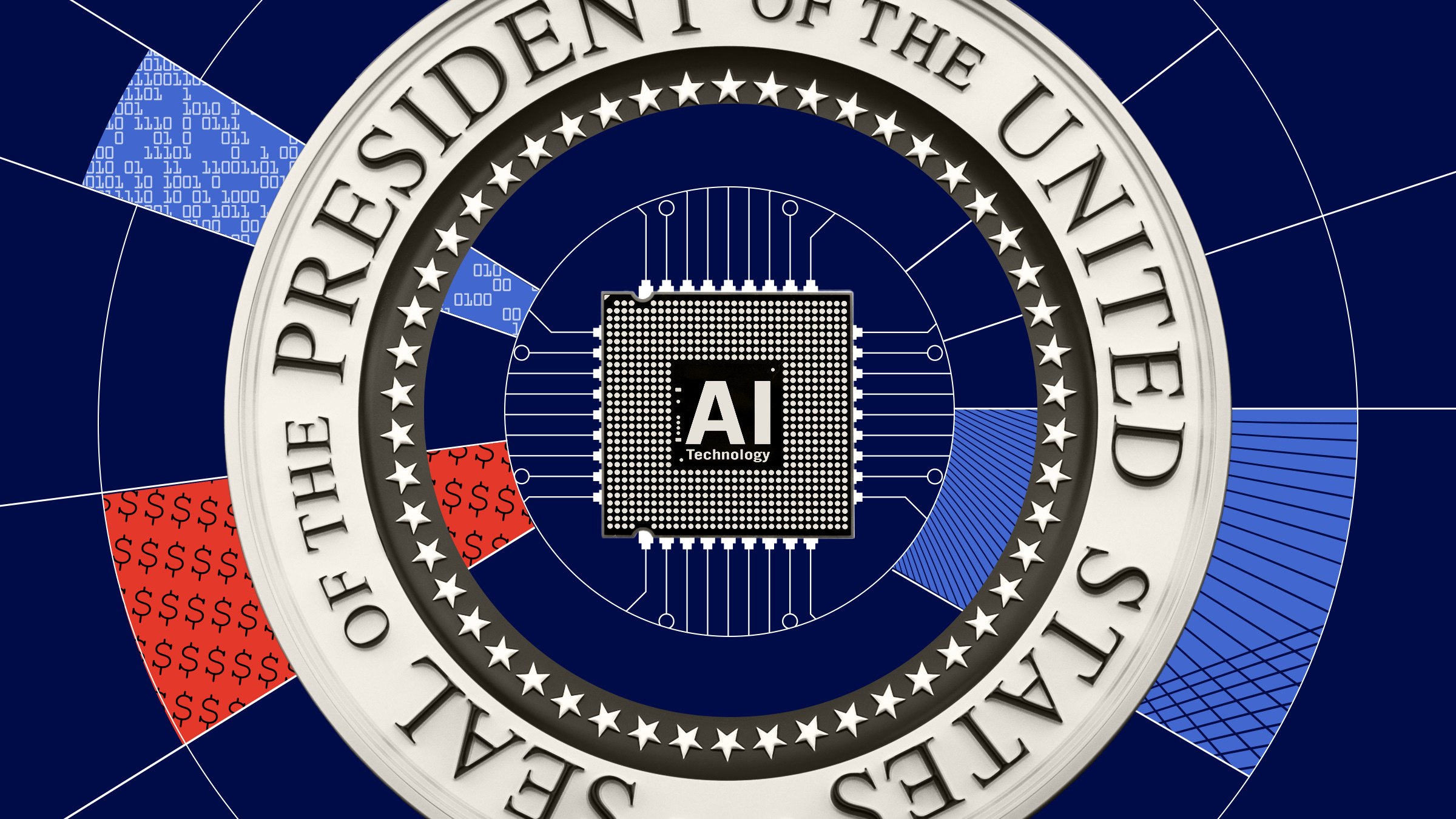
This week, the White House announced that it has finalized one of the more important documents in the country right now.
It’s supposedly a new framework for the Trump administration to review advanced AI models and decide whether and under what conditions to allow those models to be released to consumers and the public.
Except for a high-level description, though, it did not announce what’s in the document. The administration has privately shared the new framework with a handful of frontier AI companies for their input — but beyond that, the most consequential federal regulatory framework to date in the United States for the most significant technology in the world remains secret.
We don’t know who developed this frontier AI evaluation framework, who influenced it, and how. We don’t know what it contains, how it will be applied, or by whom. And we don’t know the legal authority that purportedly undergirds it. We do know Congress had no role.
This is not how laws are supposed to be made in a democracy. And it’s especially fraught given this administration’s penchant for aggrandizing and abusing its own power to enrich itself, reward its loyalists, and punish those who don’t go along.
So we are investigating.
We just submitted public records demands to the Department of Commerce, Treasury, the White House Office of the National Cyber Director, and the White House Office of Science and Technology Policy. We asked for records on an expedited basis identifying the framework’s terms and criteria, the participating companies, and the legal authority for establishing and operating it. You can read our FOIA requests here.
The White House’s recent actions on AI models
Before we get into why we’re so concerned about this, a bit of background.
There has been extensive debate in Congress and in state legislatures on the many reasons that our government might regulate AI. These include protecting our kids, guarding against disinformation, safeguarding privacy, ensuring economic fairness, strengthening cybersecurity, guarding against catastrophic risk, and beyond. Some states have enacted AI regulatory legislation on these types of issues. In our view, it’s vital for Congress to legislate in ways that maintain democratic control over how AI is developed, deployed, and affects our society. As of now, however, the U.S. Congress has not done so — nor has it authorized the White House to enact its own legal regime governing AI.
Nonetheless, the White House suddenly has sought to exercise extensive regulatory control over aspects of the industry.
After initially taking a hands-off approach to frontier AI in the name of winning the race against China, the Trump administration made a dramatic shift toward pre-release review when the progress of frontier AI began to manifest some of the security risks experts had predicted. On June 2, 2026, the White House issued Executive Order 14409, “Promoting Advanced Artificial Intelligence Innovation and Security,” which claimed to create a “voluntary” pre-release review program for frontier models. In reality, it established what Dean Ball, former Trump administration AI policy advisor now leading frontier AI policy at OpenAI, described as “a de facto involuntary licensing/preapproval regime.” And one that operates behind closed doors pursuant to undisclosed terms and murky legal authority. The administration’s subsequent actions pursuant to the EO proved this to be true.
On June 12, 2026, the Department of Commerce ordered Anthropic to suspend worldwide access to two of its AI models, Fable 5 and Mythos 5, within ninety minutes, citing export-control authority in an unprecedented context. The Commerce Department later restored access to Mythos 5 for only a select list of undisclosed “trusted partner” organizations, before lifting the export controls entirely on June 30, 2026.
Then, on July 14, 2026, the White House, Treasury, the Department of Homeland Security, and the Pentagon jointly launched “GOLD EAGLE,” a standing industry-government coordination body with undisclosed power “to collectively identify risks, prioritize action, and strengthen the resilience” of AI systems, resting on no new statutory authority. Separately, OpenAI has agreed, through informal negotiation rather than any public order, to limit distribution of its own forthcoming models to government-vetted partners.
And this week, on August 1, 2026, the White House stated that it had finalized a “voluntary” framework for reviewing advanced AI models before their release, while declining to disclose the framework’s contents, which companies have agreed to participate, or when the process will take effect.
As the Justice Department’s former head of antitrust policy, David Lawrence, put it:
President Trump is planning product releases and choosing customers of a key industry in our ostensibly free-market economy.
What the public needs to know — and why
The White House bypassing Congress to create its own secret AI regulatory regime could raise concerns in any context. It’s particularly worrisome in an era of authoritarian governance. There are three reasons why:
Autocratic capture. A common move from autocrats is to use the power of the state to capture key nodes of private industry to coerce them to do the bidding of those in power. Protect Democracy’s executive director and co-founder, Ian Bassin, termed this autocratic capture. It’s an inverse of regulatory capture where the regulated industry captures the state. We’ve seen extensive efforts from the Trump administration to capture the media so that it adheres to the administration’s party line.
The new regulatory framework gives the White House existential power over the AI companies — a critical component of the information landscape — and with that, immense leverage to engage in autocratic capture of this industry. We need to know what safeguards are in place to prevent the White House from using that sword-of-Damocles leverage in order to coerce the AI companies to do its bidding on any number of topics, from the use of deepfakes to how chatbots describe election results. As we’re already seeing, to implement the White House’s EO banning “woke” AI, the administration is ready to enforce its view of historical truth and neutrality as well as leverage federal procurement rules to decommission and punish contractors using models that display what the administration deems “partisan bias.”
Turning public office into self-enrichment. This administration has also gone to extraordinary lengths to convert its public office into personal self-enrichment for the president, his family, and those around him. Claiming unilateral control over one of the country’s largest and fastest-growing industries provides enormous opportunities for officials with conflicts of interest to act for their own financial benefit, not the public interest.
Already, there appears to be at least some degree of entanglement between the president and his family and parts of the AI industry. Recent reporting about Trump’s personal fundraising efforts raises serious questions about the financial relationships between AI companies and private entities in which the president has a financial stake, including Trump Media & Technology Group and MAGA Inc. As a Wall Street Journal analyst has described it, “we’re replacing the free market with the market for Trump’s affections.”
We need to know what safeguards are in place to avoid conflicts of interest in regulatory decisions — including what the applicable criteria are; who is applying them; and how we can know that they are operating without a personal stake in the companies they are regulating.
Coercive crony capitalism. Relatedly, this administration has demanded payoffs to support its pet and political causes — from the White House ballroom to the president’s political action committees. It is able to obtain these payouts because of its willingness to weaponize the power of government to reward friends and punish opponents. Reporting in the Wall Street Journal has indicated that President Trump has taken a close personal interest in how much companies are donating to his political interests, and “companies have paid new attention to the White House as Trump has gotten involved in regulatory decisions that once were made by independent agencies.”
That reporting includes AI companies and their customers.
The new framework gives the White House more leverage to demand money from AI companies, investors, executives, and employees. (And as we know, this is an industry that right now has a lot of money.)
Conversely, the secret executive regulatory regime also gives industry participants an opportunity to use undue influence to secure regulatory action that benefits them at the expense of their competitors — a classic crony capitalism dynamic.
A proper regulatory regime should have ample guardrails to mitigate the risk of regulatory power being leveraged for private political fundraising, or political contributions being deployed to pick winners and losers. The public needs to know if any such safeguards are in place here. Or, lacking those safeguards, in what sort of ways the president is seeking to solicit money from this industry — or parts of the industry are using undue influence and access for competitive advantage.
Whatever the public’s views on how artificial intelligence models should be regulated, we should all be concerned about a secret executive branch legal regime, especially from an administration that has exercised its power for political and personal gain. Much can go wrong when the executive branch bestows upon itself the power to decide, through undisclosed criteria and without congressional authorization, which companies succeed and which customers gain access to a general-purpose technology reshaping the economy. With an administration in office that wields its authority to entrench its power, enrich itself, and reward its friends, those concerns are greatly magnified.
A starting point to mitigating these concerns is to make public how this new legal regime works, who is involved in decisions, with what criteria, and how to avoid corruption and improper influence.
We’ll keep you posted on what our investigation turns up.

