


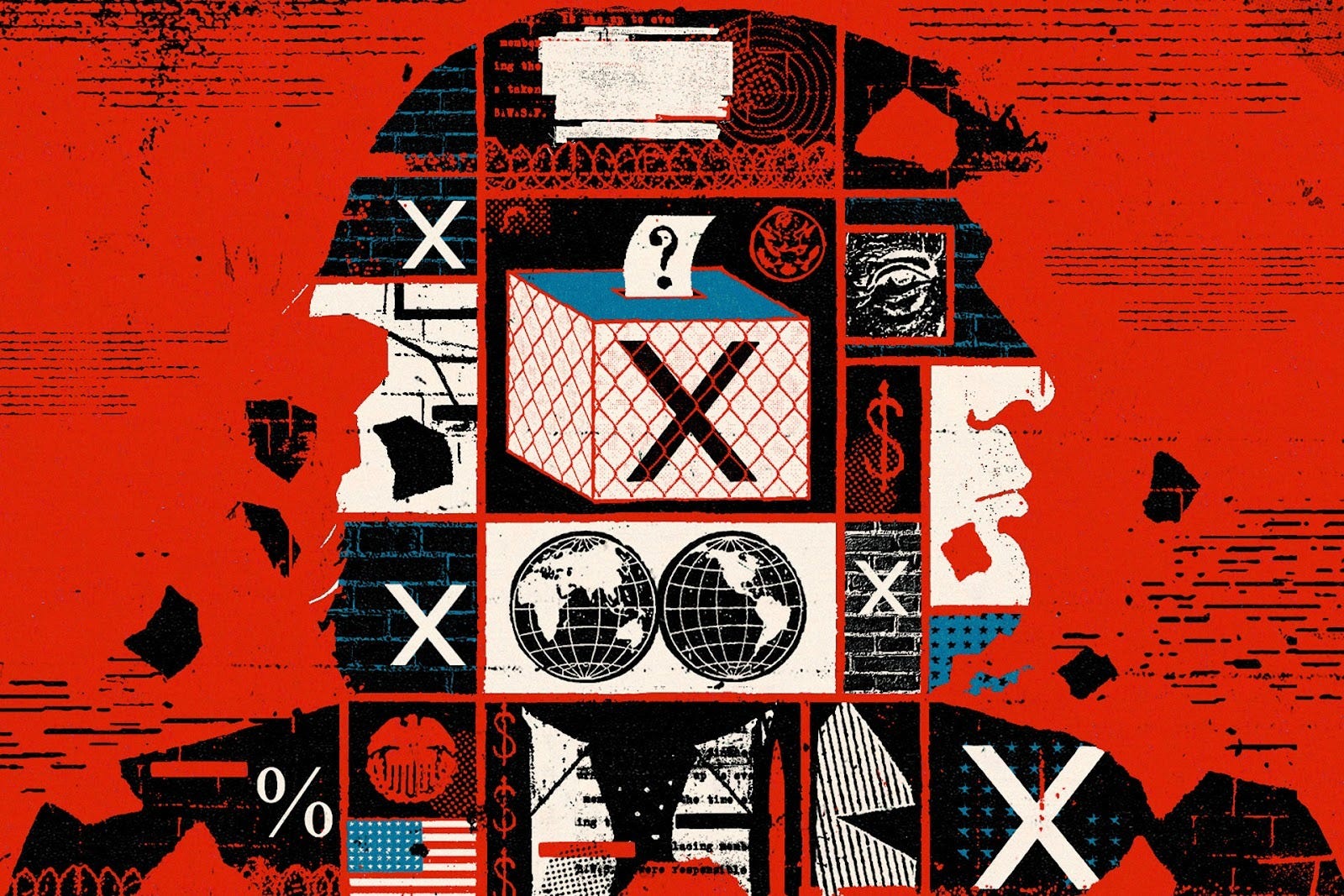
We are living through the most significant and consequential democratic backsliding episode in world history.
The United States is the largest, wealthiest, most powerful, and most established democracy ever to be seriously threatened by autocracy. Our current backsliding has been much steeper than any other recent example. This is all, quite literally, unprecedented.
Still, the United States is not exceptional, and so many of the threats facing our system of government directly mirror those faced by other democratic systems. Would-be autocrats may speak different languages and channel different politics, but their playbook tends to look remarkably similar. As such, we at Protect Democracy rely heavily on the writers and thinkers who have studied not just what authoritarianism looks like but also what it takes to survive an autocratic assault.
More often than not, that means we find ourselves reading Vox, whose journalists, writers, and editors have been on the threats-to-democracy beat since long before most publications even dared print “the A-word.” Some months ago, we started talking with their editors about the most important question right now: “How does the United States escape the threat of permanent authoritarianism after a second Trump administration?”
Eventually, those conversations led to Vox’s remarkable new series, published over the last two weeks: America after Trump: How democracies fall — and how they can come back.
As Swati Sharma, Vox’s editor-in-chief, writes in the introduction to the project:
This package takes as its starting point that global democracy is in a bad way — but that the diagnosis, while serious, isn’t terminal. America can learn from the example of other democracies that have also faltered, but ultimately succeeded. It can learn from its own past, which tells us that democratic reform not only is possible but inevitable. And it can learn from ideas given new life by our predicament, as we search for a path out of this anti-democratic cul-de-sac.
To be clear: Protect Democracy helped support this project with a charitable grant, but Vox had full discretion over the content of the reporting. They took this high-stakes question and sent their reporters around the world in search of answers, wherever they might lead.
The big thing we asked in return is to be able to share gift links to everything they found with all of you. Those links are below.
This may be one of the more important journalistic projects of the decade. Please do take the time to read, listen to, and watch the entire series — and share widely.
How one country stopped a Trump-style authoritarian in his tracks
By Zack Beauchamp
For this article, Zack Beauchamp traveled to Brazil to understand why that country’s experience with a Trump-like autocrat turned out so differently and what the United States can learn. Former Brazilian president Jair Bolsonaro looks and acts a lot like Trump. But Brazil’s Supreme Court and Congress effectively constrained Bolsonaro, preventing an effective takeover by the would-be dictator. Zack finds the important difference was that, in Brazil, public officials faced radically different incentives. Most relevant for the U.S., a multiparty system “prevented the emergence of US-style extreme partisanship — producing a legislature and judiciary primed to protect their powers against an aggressive executive.”
As he writes:
This gives us some real insight about how to fix American democracy going forward: to pass reforms that alter the incentives for legislators in particular, giving them good self-interested reasons to prefer systemic stability over partisan loyalty.
Read the whole piece.
The Brazilian playbook for defending democracy
By Jolie Myers
This episode of Today, Explained explores the fall of Jair Bolsonaro in Brazil and what it proves about Trump-style authoritarians.

What American democracy can learn from 1930s Finland
By Nate Krieger

In this video, Nate Krieger explores the remarkable story of a radical, far-right authoritarian movement that failed to secure power. It’s a story of how early and collective action won out against violence and extremism — and of the importance of unelected officials to manage the guardrails of democracy, the nonpartisan structures that maintain a healthy democratic system.
The House of Representatives is too small
By Dolly Li and Jordan Winters

In this video, Dolly Li and Jordan Winters explain why the U.S. House of Representatives has been frozen at 435 seats for more than a century — and how the growing imbalance between the size of the country and the size of our legislature may explain why many Americans feel Congress doesn’t represent them.
If you’ve ever wondered how we could actually accommodate a bigger House, Protect Democracy answered this question with actual architectural renderings. See what the House of tomorrow would actually look like.
Read more: Where will they all sit?
How to stop a dictator
By Zack Beauchamp

In this article, Zack Beauchamp looks at lessons from Brazil, South Korea, Venezuela, Colombia, Poland, and more and finds that the answer is remarkably simple: “People with political influence and platforms need to work to make the threat to democracy more legible to more people.”
Key takeaways:
Democratic survival in the face of threats like Trump is determined in large part by how obvious the threat to democracy is. The more people recognize that an elected leader is trying to destroy democracy from within, the less likely it is that said leader will succeed.
Evidence from Brazil, South Korea, and Poland — all democracies that defeated a would-be authoritarian government — show that the legibility of threat to key segments of society was critical in mobilizing the pushback that decided democracy’s survival.
This has important implications for the United States going forward. Instead of sidelining the issue of democracy, as some political pollsters suggest, those concerned about the issue should foreground it — working hard to illustrate how Trump’s behaviors threaten core freedoms people cherish.
Read the whole article.
You got your democracy back. Now what?
By Jolie Myers and Noel King
For Today, Explained, Jolie Myers and Noel King traveled to Poland to understand what happened when that country voted in an authoritarian government a decade ago. In the first episode, they look at Poland’s struggle against an authoritarian party and how, “against considerable odds, they booted out the authoritarians and got their democracy back.”

Then, in the second episode, they look at the challenges facing Poland’s current pro-democracy government as it seeks to unwind a significant backsliding event. They find that, after a period of democratic backsliding, governments that want to restore democratic rule face an “illiberal trilemma” wherein they seek to unwind authoritarian rule legally, quickly, and effectively — but it’s very difficult to achieve all three.

Listen to both episodes.
Did the Constitution doom American democracy?
A conversation with Zack Beauchamp and Matt Yglesias
In this interview, Zack Beauchamp talks with Matt Yglesias about Matt’s 2015 article, American democracy is doomed. That essay effectively predicted much of what has happened over the following decade. The crux of the argument: “Presidential systems, the late political scientist Juan Linz found, had a tendency to break down, the strict separation of powers breeding irresolvable conflict between the executive and legislative branches that tended to end in coups, or something like them.”
It’s a fascinating conversation about some of the structural challenges at the core of our crisis which — paradoxically — offer some hope for renewal. If, that is, we can change some of those structures.
Read the whole interview.
US democracy has repaired itself before. Here’s how we can do it again.
By Lee Drutman
Finally — the hope. In this essay, political scientist Lee Drutman takes a contrarian but fundamentally convincing position:
The question is not whether reform is coming. It’s what kind of reform… Gridlock may look like stability; it is actually brittleness. Eventually, it will crack. In some places, it already has. A new generation will pick up the pieces and build something new. In some places, they already are.
By changing how the parties work, Lee argues, the coming era can be more than a rebound. It may be a quintessentially American era of rebirth and renewal.
Key takeaways:
American democracy has been dramatically remade roughly every 60 years: the 1770s, the 1830s, the 1900s, the 1960s. Each time, reform came when ambitious insiders recognized the old order was dying and switched sides before it collapsed on them.
Today’s dysfunction matches the historical preconditions almost exactly: Institutional trust near historic lows, and both parties fighting the last war while new pressures accumulate with no political home.
The question is not whether reform is coming but what kind. Previous eras tried to work around parties and got hollow institutions captured by whoever was already organized. The next reform needs to change how parties themselves work.
Read the whole essay.
You write, "The big thing we asked in return is to be able to share gift links to everything they found with all of you. Those links are below." Vox gave me access to the first article I clicked on (Drutman's) but is blocking access to the others. My guess is that Vox limits ungated access to one link per IP address during some period of time.
We need a very practical strategy, e.g. a two column chart:
Col 1: List of all the guardrails, accepted protocols and laws that the Trump admin has broken, changed or ignored, particularly ones that threaten government ruled by elected leaders not dictators and ones that destroy our sense of Americans who may disagree about policies but all support our government and its Constitution
Col 2: Checklist of what laws Congress needs to pass in order to codify or replace with laws -
- previously accepted guardrails (e.g. independence of DOJ from Exec),
- protocols (e.g. treat people with respect for differences not insults - including other nations as well as our own people).
- what Trump eliminated (e.g. requirement to have all the positions for ethics monitors that Trump admin eliminated),
- softpower services to help vulnerable Americans get food, shelter and healthcare as well as
- softpower programs for countries with potential family, unnecessary diseases and deaths, etc
and some public education about reasons for softpowern (e.g., without our sharing of some of our wealth with impoverished American groups and desititute countries, those American groups and global countries may feel so desperate that they turn to terrorists for help...
...even if we don't care about destitute people in other countries for humanitarian reasons, we should care for national security reasons.)